

Back to the library
Founding Wild-caught

Wakanda

Odontomachus haematodus

  • Confirmed identification of the queen: Odontomachus haematodus.
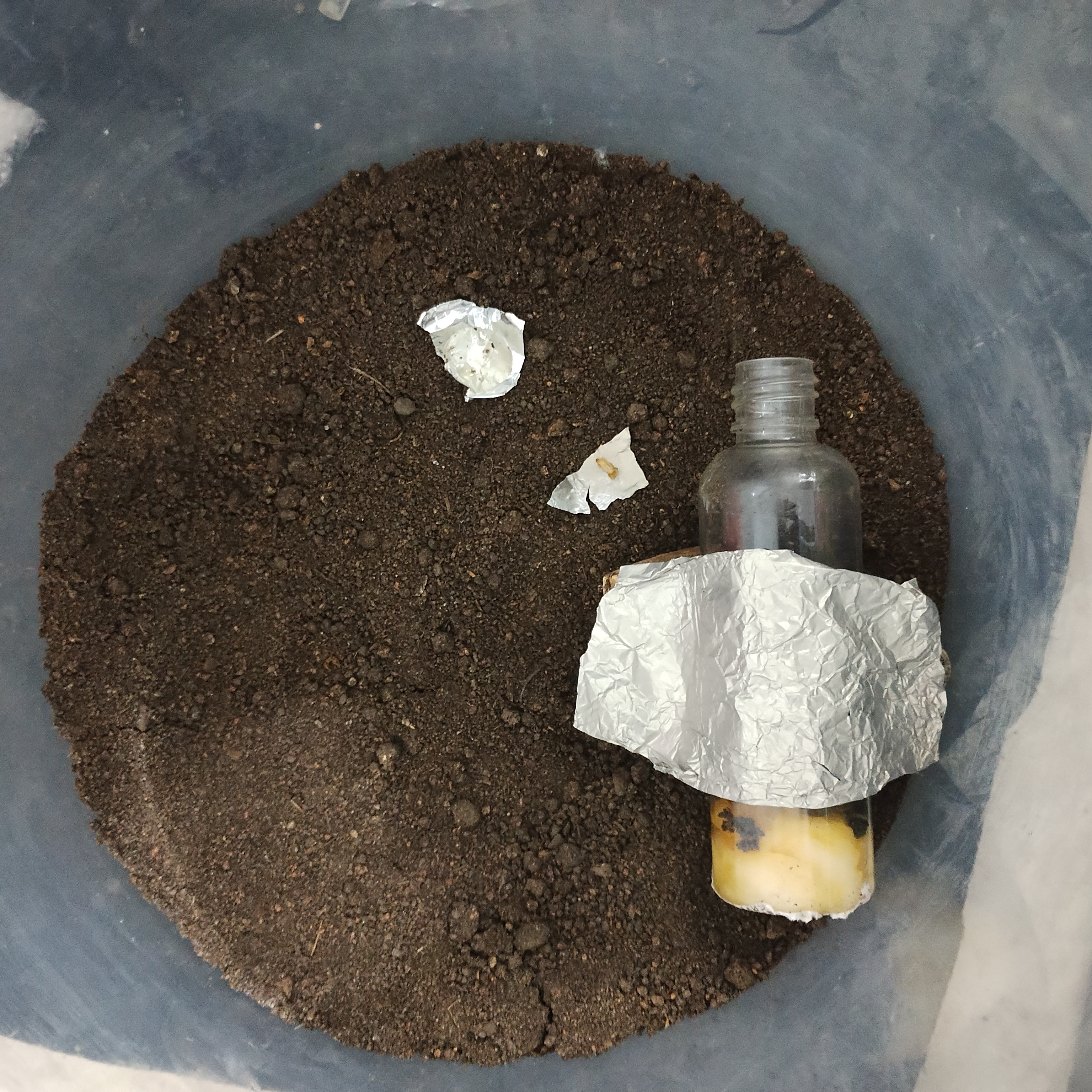
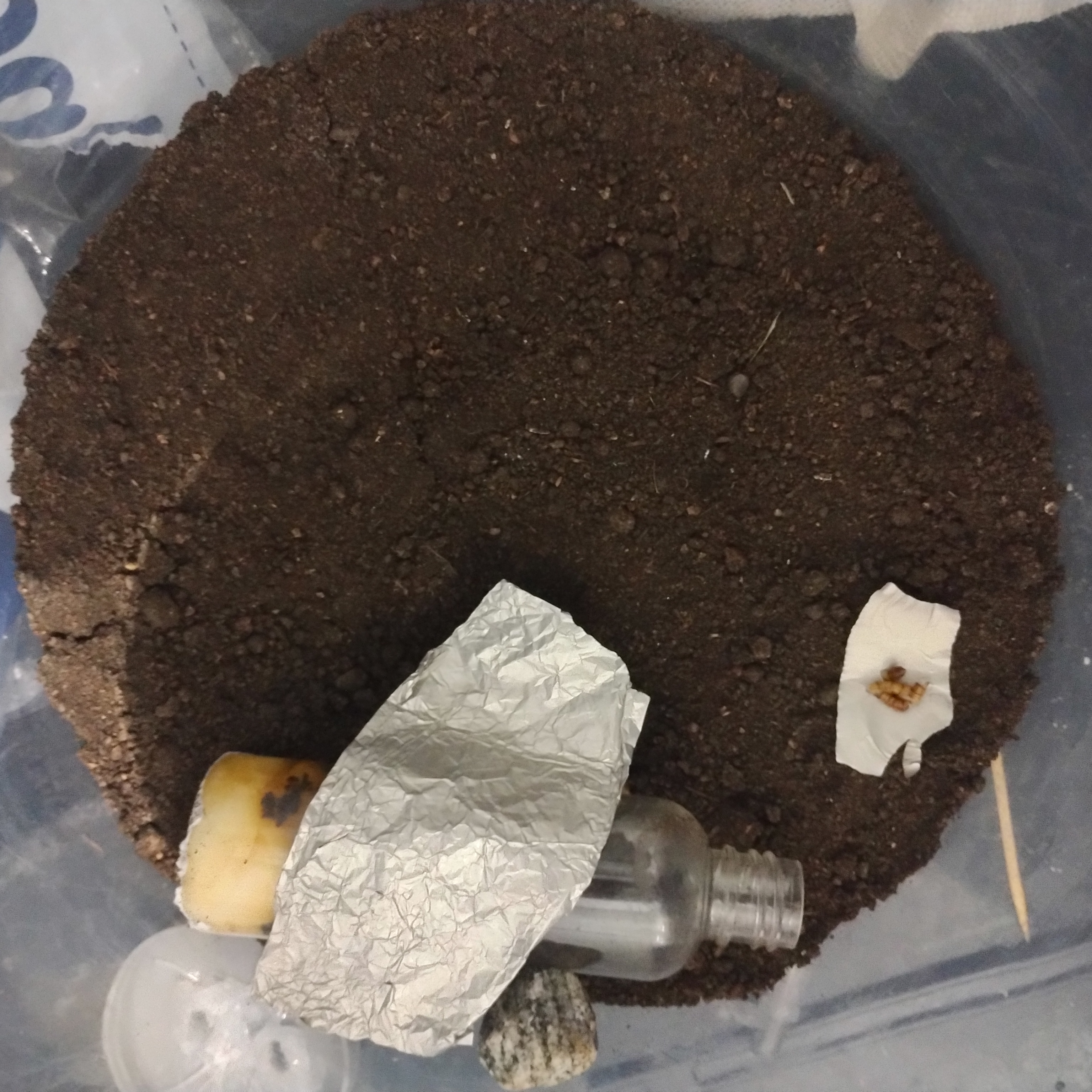
  • The functional nest remains anchored in the original queen tube.
  • The outer front collected in the backyard in 31/05/2026 remains separate from Wakanda and treated as a side issue.

TGC thermometer

Public assessment

Latest overall condition score for the colony shared by the keeper

CHM meter Good
77.7 /100
Fundação Semiclaustral 07/07/2026 · coverage 87%

Field notebook

Public diary

Dated observations shared by the keeper

Check-in — 07/07/2026

07/07/2026

Routine 21:01:00

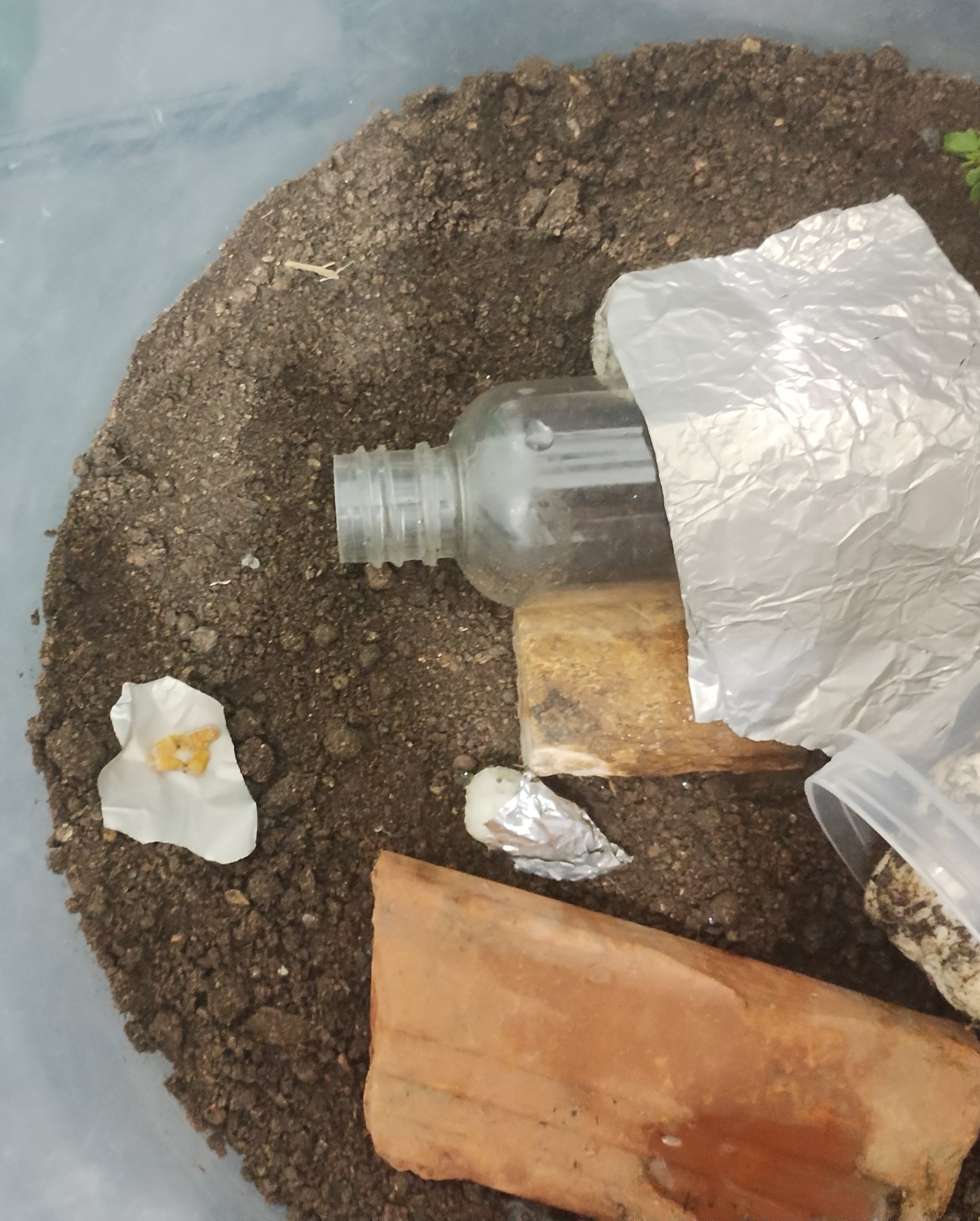
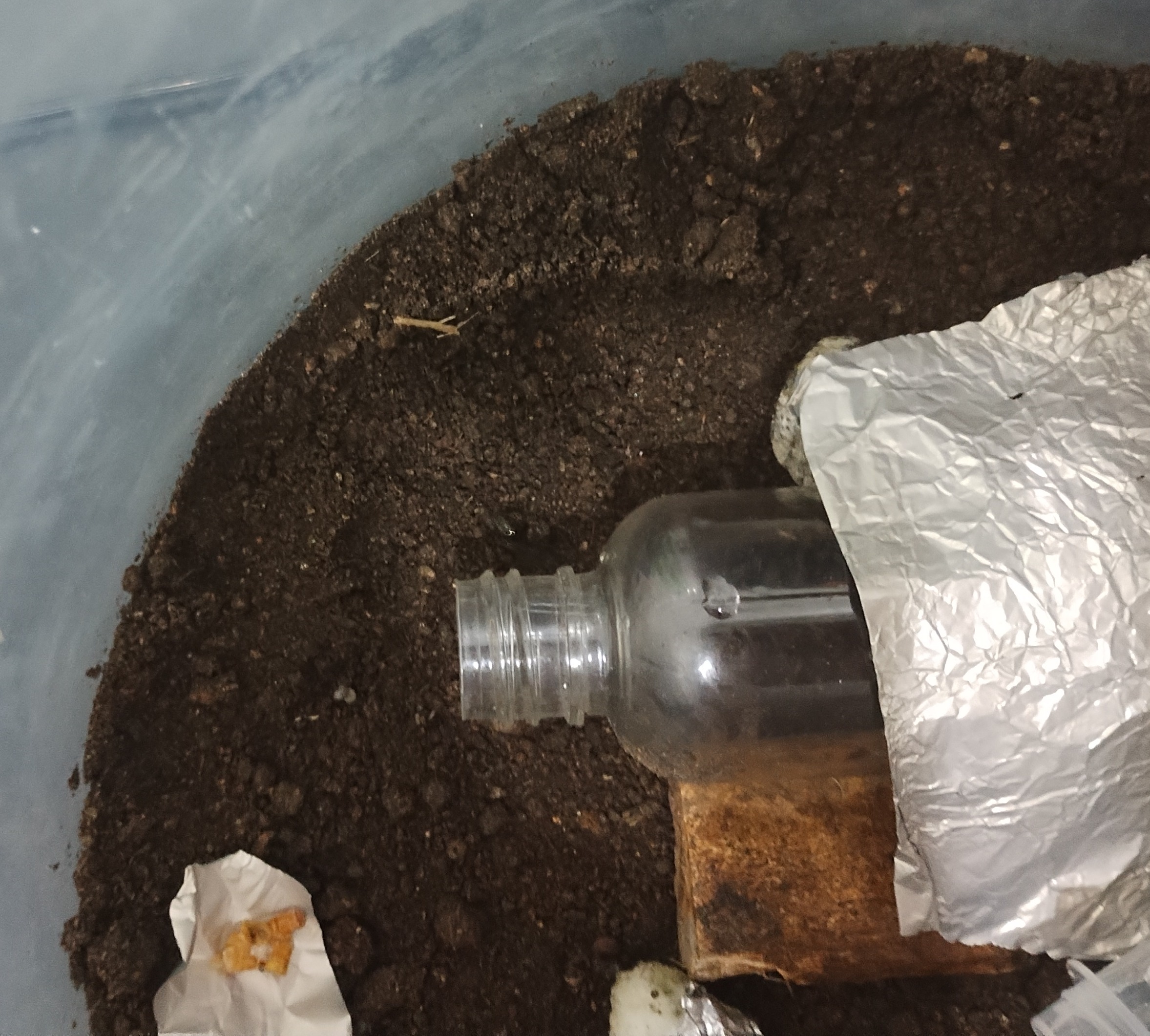
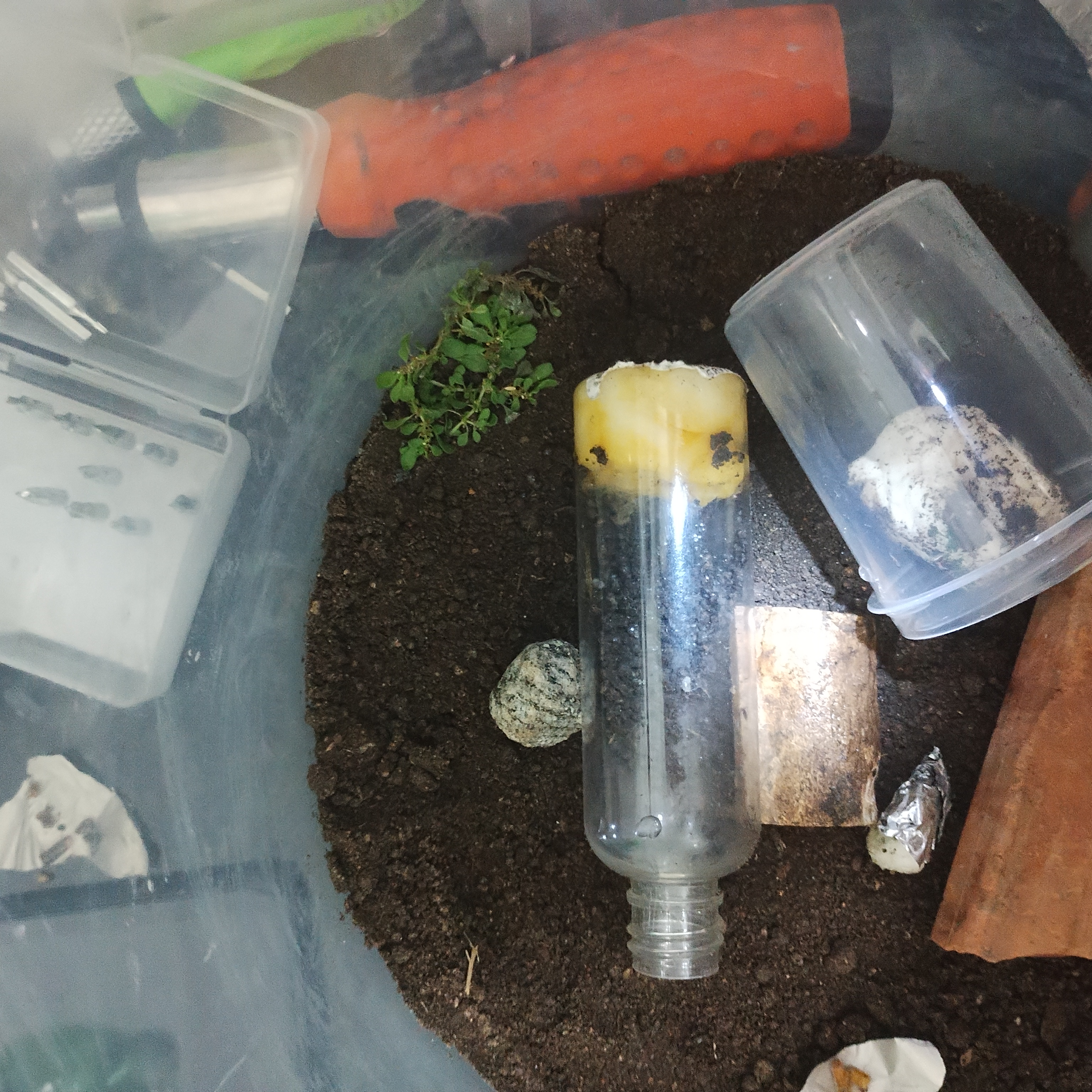
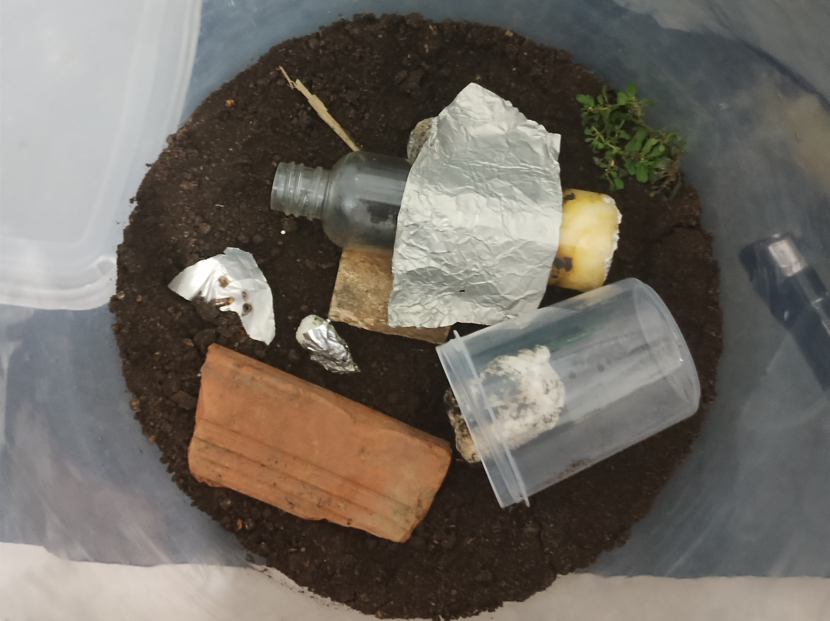
No pulpa yet, but the structure of compost inside the nest is bigger now

Record created by the guided check-in.

Overall impression: Stable.

Population updated — Larvae: 3 → 4.

Feeding and cleaning

04/07/2026

Routine 22:30:00

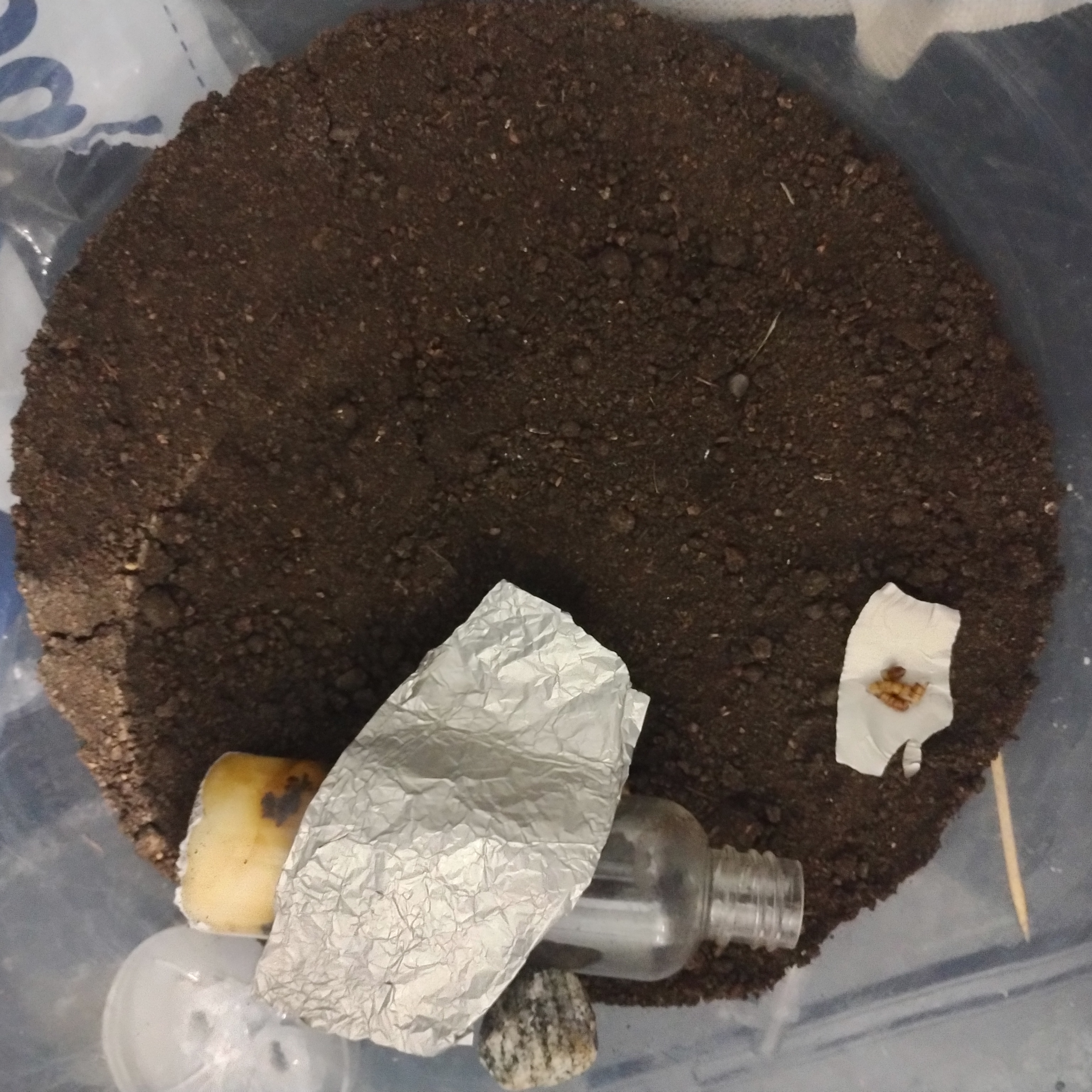
cleared all structs not in use by the queen

Feeding and cleaning

02/07/2026

Routine 22:28:00

Window without interaction after external reconfiguration

15/06/2026

Routine

Observed event

  • There was no interaction with the colony on this day.
  • The setup remained at rest after the external expansion carried out on 14/06/2026.

Technical reading (hypotheses)

  • For Odontomachus haematodus, a 24 h window without a new opening right after a change of the external arena is usually worth more than insisting on repeated checks.
  • Since the base nest was preserved inside the tube, today's rest favors a cleaner reading the next night: it will be possible to differentiate spontaneous exploration from a defensive response to disturbance.
  • The absence of interaction today means there is still no closed professional reading on acceptance of the U tunnel, the fate of the fractioned mealworm or any spatial reorganization of the queen.

What can be done now

  • Concentrate the next observation in the night period.
  • Prioritize signs of spatial orientation: tube use, visits to the new tunnel, substrate transport and the approach pattern to the food.
  • Avoid any structural correction before this first post-rest reading.

Warning signs to monitor

  • Appearance of closed condensation without the colony having been observed.
  • Odor or deterioration of organic matter in the new pot.
  • The need to disturb the tube to "look for" the queen.

Quick log

  • Interaction today: no
  • Feeding offered: kept from the previous day
  • Consumption observed: not checked today
  • Humidity/condensation: not checked today
  • Brood visible: not checked today
  • Next check: short night observation, no rearrangement, focused on orientation and use of the new space

Cleaning old tenebrium and expanding the external setup with preserved tube

14/06/2026

Maintenance

Observed event

  • All previous mealworm remains that still stayed in the setup were removed.
  • 1 new dead mealworm, cut into 4 parts, was added.
  • The larger outer pot the tube was in stopped being used because it was small for the current configuration.
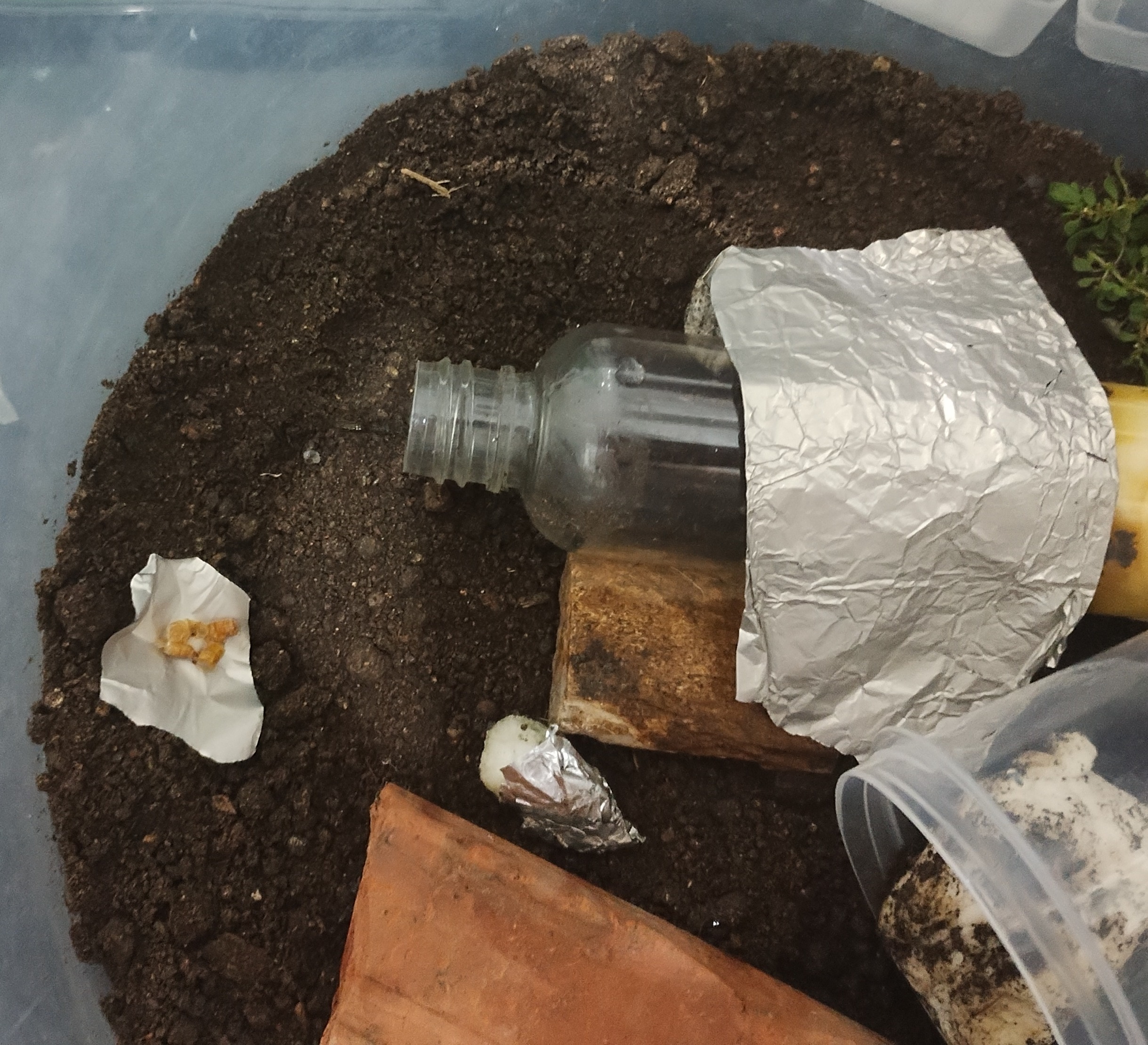
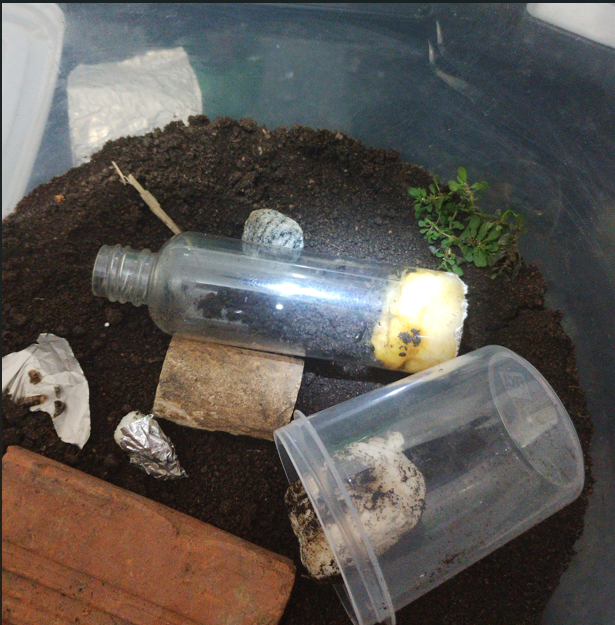
  • The tube was moved whole to a new larger outer pot, without opening the queen's original nest.
  • In the new pot, natural setup elements were added: stones, small ground-cover plants and a new nest option.
  • A U-shaped tunnel of about 13 cm was also modeled with epoxy putty, leaving the upper part uncovered and covered with translucent red plastic for observation.

Technical reading (hypotheses)

  • In Odontomachus haematodus, moving the whole tube to a larger arena is much less aggressive than opening or rebuilding the chamber the queen already approved. The functional core of the original nest was preserved.
  • The total removal of the old mealworm leftovers was technically correct. In a humid environment, aged protein residue worsens the acceptance reading and increases microbiological risk without bringing real nutritional gain.
  • Re-offering 1 mealworm split into 4 leaves exposed tissue and reduces the mechanical work for a large ponerine that may prefer to handle smaller portions near the safe entrance of the shelter.
  • The new outer relief is coherent with the repertoire of O. haematodus, which explores cavities, covers and soil irregularities. Even so, the new tunnel should be read as an option, not as a forced migration goal.
  • Since the structural change was relevant in the outer environment, but not in the base nest, the most important biological reading now is not "did it move or not today", but whether the queen keeps orientation, keeps using the tube as a reference and starts inspecting the new space without chaotic escape.

What can be done now

  • Do the first night check of the new arrangement without moving the tube or dismantling the U tunnel.
  • Observe whether there is a visit, substrate transport or simple recognition of the new tunnel.
  • Remove the mealworm pieces if they age without use.
  • Treat any staying in the original tube as a positive datum of continuity, not as a "lack of adaptation".

Warning signs to monitor

  • Strong condensation or a humidity pocket in the new outer pot.
  • The queen wandering exposed for long periods, without a clear return to the shelter.
  • Mealworm pieces aging inside the queen's use zone.
  • Organic decay of the small plants in the same micro-space as the nest.

Quick log

  • Interaction today: yes
  • Feeding offered: 1 dead mealworm in 4 parts
  • Consumption observed: not yet read in this window
  • Humidity/condensation: new reading pending after setup expansion
  • Brood visible: not confirmed in this interaction
  • Next check: short night reading of the original tube use, the U tunnel and the fate of the fractioned mealworm

Change of tenebrio, new fractional micro-offer and short return to the tube

11/06/2026

Maintenance

Observed event

  • The whole dead mealworm added the previous day was removed, although the doubt remained whether it was still really whole.
  • A new dead mealworm split into 3 parts was added.
  • Honey was added.
  • The nest architecture built by the queen herself started preventing a reliable view of any progression of eggs to larvae.
  • Although the queen still seemed slower, upon uncovering the tube to look inside she started walking through the tube again.

Technical reading (hypotheses)

  • In Odontomachus haematodus, removing an old whole mealworm was the right decision. In a humid, closed setup, a large carcass ages badly, pollutes the acceptance reading and increases microbiological risk without necessarily adding food value.
  • Re-offering the mealworm already split into 3 greatly improves the test design. For a more restrained queen possibly with hidden brood, smaller parts reduce the manipulation cost and leave the exposed tissue more accessible than a whole item with a closed cuticle.
  • The loss of direct brood visibility, in this case, should not automatically be read as a worsening. For Odontomachus, sealing, narrowing or shielding the micro-chamber is a behavior technically coherent with control of humidity, darkness and protection of the egg-laying.
  • The strongest datum of the day is that the queen, although slow, still responded to the tube being uncovered with locomotion oriented by her own shelter. In O. haematodus, this suggests preservation of spatial orientation and reactivity, not a collapse picture.
  • Isolated slowness still deserves vigilance, but here it weighs less as a terminal sign and more as a possible combination of protective behavior, reduced metabolism and a brood-care phase.
  • Since the queen went back to using the tube when exposed, the tube still remains functional in her internal map. This matters because it helps read the behavior without needing to dismantle the closed part of the nest to "see" the brood.

What can be done now

  • Keep the fractioned mealworm and the honey for a short window, removing leftovers if there is no use.
  • Avoid opening the structure just to try to re-count the brood; at this moment, behavior and the fate of the food are better indicators than forced visibility.
  • Observe whether the queen returns to the tube spontaneously at the next checks, without being provoked by opening.
  • If there is a new protein offering after this cycle, keep preferring small or previously opened items.

Warning signs to monitor

  • Pieces of mealworm remaining intact for many days or with odor.
  • Strong condensation or excessive humidity in the region where the queen shielded the brood.
  • A further important drop in mobility, without a new path through the tube.
  • A growing need to open the structure to locate the queen or the brood.

Quick log

  • Interaction today: yes
  • Feeding offered: honey + 1 dead mealworm split into 3
  • Consumption observed: still inconclusive in this window; old whole mealworm removed
  • Humidity/condensation: no new closed reading; nest more shielded by the queen herself
  • Brood visible: not safely confirmable due to the closing of the nest
  • Next check: short reading of mobility, tube use and the fate of the 3 mealworm pieces

Spatial analysis of the yard + refinement of the external point + reorganization of collected workers

01/06/2026

Incident

Observed event

  • A map of the backyard was consolidated with the two key points of the case:
    • point where Queen Wakanda was previously found;
    • point at which the current external colony was found.
  • The main clay area measures approximately 2.5 m x 3 m.
  • The queen point is in the southeast sector of the clay.
  • The external colony point is in the northeast sector of the clay, next to the remaining tall grass.
  • There was manual cleaning, removing weeds with roots between one point and another, and the excavation was stopped when the colony was located.
  • It was decided that the external colony cannot remain loose in the yard, due to children frequenting the area and a history of ant allergies.
  • During the night check, the Wakanda queen's honey was exchanged and 1 dead bathroom mosquito was offered.
  • Upon returning to the excavation site, there was no visible activity of the odontos at the point initially observed, raising the momentary hypothesis of migration.
  • A short exploratory excavation was carried out to try to locate the anthill.
  • During this search, another ant nest was identified practically next to the area assigned to the odontos.
  • When continuing digging, 4 more small workers were found in a specific position on the ground, and these 4 were collected.
  • The excavation was interrupted after this collection, maintaining the idea of ​​resuming the search with more time and in a way more aligned with the initial plan.
  • The group of external workers was removed from the previous container, which had a lot of soil mixed with organic waste.
  • The workers were transferred to a smaller, cleaner pot, still with some residual soil.
  • In the new pot, honey, 1 dead mosquito and a cotton ball with water were left, to keep carbohydrates, protein and hydration available.

Technical reading (hypotheses)

  • The map indicates that the current core of the outer colony is probably more associated with the root waste/high grass in the northeast quadrant than with the already cleared corridor.
  • The short distance between the two points increases the plausibility of an ecological/historical relationship between the events, but does not prove kinship with Wakanda.
  • As the colony has already suffered disturbance, the worst course of action now would be to continue pulling weeds blindly; The best approach is containment + controlled extraction.
  • The operational priority is no longer just "finding out who and who" and starts to include immediate human security.
  • The absence of visible activity upon return at night does not prove migration; may reflect poor observation window, temporary withdrawal or very short displacement into the root network.
  • The finding of 4 workers in a more specific position strengthens the view that there is a real microfocus in the immediate surroundings, even without direct exposure of the main chamber.
  • The presence of another ant nest glued to the active point increases the risk of confusion of origin during blind excavation, reinforcing the need to differentiate morphology and exit pattern before enlarging the opening.
  • Cleaning the external workers' pot reduces organic load and basic health risk for the quarantined group.
  • As ponerinas do not depend on classic oral trophallaxis, leaving carbohydrates, small prey and water directly accessible to all workers remains the correct approach in the temporary container.

What can be done now

  • Prohibit the clayey area until the external colony is removed.
  • Work with a short screening session in the northeast quadrant, followed by extraction using a controlled lateral method or root block, according to the observed convergence.
  • Keep Wakanda completely separate from this process.
  • Use note 13 - Field Map and Extraction Methods of the External Colony as the base document for the operation.
  • Mark, in the next return, the exact position where the 4 additional workers were found to check if this point repeats activity.
  • Avoid new large cavities without first trying to reconfirm whether the observed focus really belongs to the dental group.
  • Keep the pot of external workers under short daily observation to check access to honey, water and prey, in addition to removing biological remains if necessary.

Warning signs to monitor

  • Workers emerging at several points at the same time, without a clear focus.
  • Attempt to continue extensive manual cleaning before locating the chamber.
  • Presence of children in the yard during the operation.
  • Any relevant allergic reaction during handling or observation.
  • Rapid mortality in the external worker pot, indicating hygiene, humidity or ventilation problems.
  • Recurrent confusion between the target nest and other small nests coexisting on the same strip of soil.

Quick registration

  • Interaction today: yes
  • Food offered: for Wakanda, exchange of honey + 1 dead bathroom mosquito; for external workers, honey + 1 dead mosquito
  • Observed consumption: no confirmation of Wakanda consumption in this check; external workers relocated with new food available
  • Humidity/condensation: no new consolidated structural reading of Wakanda; external workers with a damp cotton ball in the new pot
  • Visible child: not recounted in this note
  • External workers collected today: +4 on night return, at a specific point close to the area already excavated
  • Next check: next night/controlled operation in the northeast quadrant of the clay, focusing on reconfirming the point of the 4 additional workers and following 13 - Field Map and Extraction Methods of the External Colony

Cricket consumption and discovery of very small external workers in the backyard

31/05/2026

Maintenance

Observed event

  • The small black cricket offered on 05/30 was consumed.
  • No new protein was added at the end of the day.
  • Honey entered the exchange/cleaning window for 06/01/2026.
  • During cleaning of the yard, very small ants with an appearance compatible with Odontomachus were found.
  • More than 15 of these external workers were carefully collected in the backyard.
  • No chamber with eggs, larvae or pupae was found.
  • The workers were very sparse and each individual was difficult to locate during the excavation.
  • The hypothesis arose that they could be young/dwarven workers related to the Wakanda queen, who had been captured in the backyard carrying a larva in her mouth.

Technical reading (hypotheses)

  • Cricket consumption once again reinforces small crickets as high-priority functional prey for Wakanda.
  • The absence of new offers on the same day helps maintain clean reading and reduces organic overload.
  • Very small workers may be dwarfs or just smaller workers from another colony; Size alone does not allow inferring affiliation.
  • The pattern of scattered workers without exposed chambers is compatible with foragers from a colony that has not yet been located, with no proof that the colony is the same as that of Queen Wakanda.
  • For biological and social safety, these external workers must be treated as a separate group until stronger evidence.

What can be done now

  • On 06/01/2026, offer new fresh microprey to Wakanda and clean/change the honey.
  • Keep external workers in a separate container, without any direct or indirect contact with Queen Wakanda.
  • Return to the excavated point at night with a mapping strategy and focal capture of the external colony, instead of continuing blind excavation.
  • Record the field plan and safe kinship testing protocol in a separate note.

Warning signs to monitor

  • Old leftover honey or new protein stopped in the Wakanda setup.
  • External workers fighting among themselves in the temporary container.
  • New excavations in the yard without clear convergence to a nesting point.
  • Attempt to test direct contact between external workers and the queen before locating the external colony/queen.

Quick registration

  • Interaction today: yes
  • Food offered: no new offer; reading of the small cricket offered on 05/30
  • Consumption observed: small cricket consumed
  • Humidity/condensation: without new water adjustment; honey exchange/cleaning scheduled for 2026-06-01
  • Visible creation: not safely recounted
  • Next check: 2026-06-01 (new micro-offer for Wakanda, honey exchange and night operation to map the outer colony)

Confirmed refusal of fire ant and switch to small black cricket

30/05/2026

Maintenance

Observed event

  • The fire ant offered on 05/29 remained in place.
  • Previous food has been removed/cleaned.
  • 1 small black cricket was offered as a new protein test.
  • There was no structural change in the setup.

Technical reading (hypotheses)

  • The presence of the fire ant reinforces repeated refusal of that item.
  • The return for small cricket follows the best historical line of acceptance ever observed in the project.
  • Cleaning before changing the setting reduces organic load and improves the reading of the next cycle.
  • The absence of structural changes remains the safest approach to avoid disturbing the offspring in the tube.

What can be done now

  • Reevaluate the cricket in 12-24h.
  • Remove the offer if it remains intact beyond the safe window.
  • Record the condition of the honey in the next cycle to decide on exchange/renewal.
  • Maintain the protocol of 1 single prey at a time.

Warning signs to monitor

  • Small cricket intact the next day.
  • Odors or signs of old honey degrading.
  • Condensation reappearing on the tube or lid.
  • Queen leaving the breeding area due to repeated disturbance.

Quick registration

  • Interaction today: yes
  • Food offered: removal of intact fire ant + offer of 1 small black cricket
  • Consumption observed: fire ant refused; cricket result still pending
  • Humidity/condensation: without new water reinforcement
  • Visible creation: not safely recounted
  • Next check: 2026-05-31

New simple test with fire ant after lack of available food

29/05/2026

Maintenance

Observed event

  • The setup had no food available in the cycle.
  • 1 recently dead fire ant was offered for a new acceptance test.
  • The management of the day was reduced to placing the food.
  • There was no structural cleaning, nest change or new water adjustment.

Technical reading (hypotheses)

  • Repeating the fire ant as a unique offering helps better separate palatability from other factors.
  • Limiting management to a single feeding intervention preserves stability while the tube still requires moisture and substrate monitoring.
  • If the fire ant remains intact in the next cycle, the item will have strong evidence of low attractiveness for the moment.
  • The absence of food available before the new offer does not alone prove an increase in appetite; may reflect previous consumption, internal disposal or limited visibility.

What can be done now

  • Recheck in 12-24 hours without opening the setup more than necessary.
  • Remove the fire ant if it remains intact.
  • Keep 1 gift per cycle and avoid overlapping another micro-offer on the same day.
  • Hold new hydration until there is a clear need.

Warning signs to monitor

  • Fire ant stopped/intact for more than 24 hours.
  • Start of mold or odor around food or old honey.
  • Advancement of the substrate wall for functional obstruction of the tube.
  • Increased agitation of the queen after the short opening.

Quick registration

  • Interaction today: yes
  • Food offered: 1 freshly killed fire ant
  • Observed consumption: previous food absent/exhausted; result of the new offer still pending
  • Humidity/condensation: without new water adjustment
  • Visible creation: not safely recounted
  • Next check: 2026-05-30

Acceptance of 2 flies, wall of substrate in the tube and new indication of increase in brood

28/05/2026

Observation

Observed event

  • On 05/27, 3 types of fly were offered for preference testing.
  • On the afternoon of 28/05, 2 flies had disappeared and only one very small fly remained.
  • Practical and acceptance reading of at least 2 flies in the same cycle.
  • The queen continues transporting substrate from the external area into the tube and forming a structure similar to a wall.
  • The substrate taken into the tube appears damp even at points further away from the cotton.
  • The number of eggs seems to have increased again.
  • There has not yet been clear visual confirmation of larvae; If they exist, they may be hidden in damp soil or near cotton.

Technical reading (hypotheses)

  • The disappearance of 2 of the 3 flies reinforces a better feeding response for this group of prey compared to moths and fire ants.
  • The remaining (smaller) fly may indicate size/tissue content selectivity or consumption limit in the cycle.
  • The substrate "wall" suggests active engineering of the microhabitat to protect brood and control internal microclimate.
  • Moisture on a substrate away from the cotton can occur due to the transport of moist particles, internal condensation or capillary redistribution in the material.
  • The apparent increase in eggs is compatible with continued laying, but without visualization of larvae it is not possible to close the development stage.

What can be done now

  • Remove the remaining fly if it remains intact to reduce organic load.
  • Return to the 1 prey per cycle protocol after this multiple test.
  • Monitor daily whether the substrate wall advances to partially obstruct the tube inlet.
  • Avoid reinforcing water while there are signs of damp substrate and condensation.
  • Keep checks short in low light to try to confirm larvae without dismantling the structure.

Warning signs to monitor

  • Progressive obstruction of the tube entrance by substrate wall.
  • Substrate with a slimy appearance, odor or white mold.
  • Sudden drop in activity after an increase in internal humidity.
  • Eggs dispersed for several days without regrouping.
  • Prolonged absence of any sign of transition to larvae even with an increase in eggs.

Quick registration

  • Interaction today: yes
  • Food offered: no new offer; reading of the multiple offer made on 05/27 (3 flies)
  • Consumption observed: 2 flies disappeared; 1 very small fly remained
  • Humidity/condensation: internal substrate appearing damp, including in points away from the cotton
  • Visible hatchlings: yes (eggs showing signs of enlargement); larvae not visually confirmed
  • Next check: 2026-05-29 (remove remaining residue and try to confirm signs of larvae without increasing disturbance)

Moth refusal, test with 3 types of fly and new sign of increased brood

27/05/2026

Maintenance

Observed event

  • The food offered on 05/26 (piece of moth) was not consumed.
  • The plate was cleaned.
  • 3 types of fly were offered in the same cycle for preference testing.
  • Water with honey was offered again, due to the absence of a carbohydrate source in the setup.
  • The queen was seen carrying a cake of eggs in her mouth/jaws.
  • 3 eggs were also seen positioned in a corner of the tube.
  • The general reading and increase in the number of eggs.
  • The substrate inside the tube appears to form a line.

Technical reading (hypotheses)

  • The moth's refusal for another cycle reinforces the low attractiveness of this item at this time.
  • The test with 3 types of flies quickly expands the palatability screening, but can make it difficult to accurately assign acceptance if more than one item is missing.
  • The return of water with honey replaces an energy source of carbohydrates in the system.
  • Queen carrying egg cake + 3 eggs visible in the corner and consistent with active brood management and reproductive progression.
  • The substrate "line" in the tube can be adjusted to the barrier/internal microstructure and must be monitored so as not to obstruct the passage.

What can be done now

  • Keep a short check every 12-24h to record which type(s) of flies were accepted.
  • If there is any leftovers, remove any leftovers from the dish to avoid accumulated organic load.
  • Keep microdrops of water with honey at a low volume and renew only when necessary.
  • Avoid opening/illuminating the tube beyond the minimum so as not to interrupt the handling of the offspring.

Warning signs to monitor

  • Eggs dispersed over a prolonged window, without regrouping.
  • Increased humidity with risk of mold in fly/honey remains.
  • Substrate line evolving to partial blockage of the tube entrance.
  • Sudden drop in foraging activity after the new multiple offer.

Quick registration

  • Interaction today: yes
  • Food offered: removal of uneaten moths; offering 3 types of flies; return of water with honey
  • Consumption observed: moth refused; fly results still pending
  • Humidity/condensation: without new structural water reinforcement; only return energy microsource (water with honey)
  • Visible offspring: yes (queen carrying egg cake + 3 eggs visible in the corner of the tube; indication of increase)
  • Next check: 2026-05-28 (map preference between flies and revalidate cohesion of the egg cluster)

Minimum count of 6 eggs, setting adjustment and more protective behavior in the tube

26/05/2026

Maintenance

Evento observado

  • Foi possivel contar pelo menos 6 ovos dentro do tubo da colonia Wakanda.
  • As formigas de fogo ofertadas em 25/05 nao foram consumidas.
  • As formigas de fogo mortas foram removidas.
  • Foi adicionado um pedaco de mariposa recem-morta como nova oferta proteica.
  • O periodo tem estado frio (cerca de 22 C).
  • Ao descobrir e iluminar o tubo para contagem/analise, o padrao anterior era a rainha sair do tubo e explorar o ambiente.
  • Nos dias 25/05 e 26/05, a rainha passeou dentro do tubo, mas nao saiu para fora como costumava fazer.

Leitura tecnica (hipoteses)

  • A contagem minima de 6 ovos reforca presenca de cria ativa e supera os registros anteriores de contagem aberta (>2 ou montinho sem numero).
  • A recusa das formigas de fogo em dois ciclos sugere baixa atratividade desse item neste momento, mesmo quando fracionado.
  • A troca para mariposa amplia o teste de palatabilidade com presa diferente, mantendo logica de microoferta unica.
  • Temperatura mais baixa (~22 C) pode reduzir atividade metabolica e ritmo de desenvolvimento dos ovos.
  • A menor saida externa diante de luz/manuseio pode indicar fase de maior protecao da cria no abrigo atual.

O que pode ser feito agora

  • Manter apenas a microoferta atual (mariposa) e reavaliar em 12-24h antes de nova troca.
  • Evitar descobrir/iluminar o tubo mais de uma vez no mesmo ciclo, para reduzir gatilho de vigilancia.
  • Manter pausa de hidratacao enquanto houver historico recente de condensacao.
  • Priorizar leitura lateral rapida e sempre no mesmo horario para comparabilidade.

Sinais de alerta para monitorar

  • Condensacao persistente ou crescente na tampa/tubo.
  • Ovos dispersos fora do agrupamento por janela prolongada.
  • Restos de mariposa umidos por mais de 24h sem manejo da rainha.
  • Mudanca brusca para fuga recorrente apos checagem.

Registro rapido

  • Interacao hoje: sim
  • Alimentacao ofertada: remocao de 2 formigas de fogo mortas e oferta de 1 pedaco pequeno de mariposa
  • Consumo observado: formigas de fogo nao consumidas; resultado da mariposa ainda pendente
  • Umidade/condensacao: sem nova hidratacao; monitoramento mantido por historico recente de condensacao
  • Cria visivel: sim (pelo menos 6 ovos)
  • Proxima checagem: 2026-05-27 (avaliar mariposa, condensacao e coesao do agrupamento de ovos)

Heap of uncounted eggs and new offering with fire ants

25/05/2026

Maintenance

Observed event

  • The food offered in the previous cycle was no longer visible.
  • Night photos of the setup were taken.
  • A lot of eggs were observed, but without a reliable count.
  • The food plate was cleaned to readjust the supply.
  • The old honey was removed because it was too old, without replacing a new drop in this cycle.
  • Added 2 freshly killed fire ants, chopped for ease of consumption.
  • The tube was covered with removable aluminum to increase darkness.
  • The images show visible condensation on the lid and a lot of substrate accumulated in the tube/neck region.

Technical reading (hypotheses)

  • The new disappearance of the prey reinforces the sign of use/consumption more than an isolated event.
  • Switching to 2 chopped fire ants increases contact area and can make handling/consumption easier compared to the entire prey.
  • Removing old honey without immediate replacement reduces fermented organic load in the short term.
  • Removable aluminum can help with darkening, as long as it does not block ventilation or require constant manipulation.
  • The condensation seen in the photos is consistent with the water reinforcement of 24/05; Therefore, the dominant risk in the short term becomes excess humidity with fungus.
  • The pile of eggs must be treated as confirmation of brood present, but without closed counting due to angle/flash limit.

What can be done now

  • Keep the aluminum only as a loose/removable cover, without sealing the screen or air passage.
  • Do not add more water until condensation reduces.
  • Reassess in 12-24h whether the crushed fire ants were partially/completely consumed.
  • Continue short checks and prefer lateral reading without moving the tube.

Warning signs to monitor

  • Condensation increasing from one day to the next.
  • White mold on cotton, substrate or organic remains.
  • Fire ant remains remaining moist for more than 24 hours on the plate.
  • Pipe entrance blocked by earth.
  • New shelter change immediately after covering with aluminum.

Quick registration

  • Interaction today: yes
  • Food offered: 2 freshly killed, chopped fire ants; old honey removed and not renewed
  • Observed consumption: previous food absent; result of the new offer still pending
  • Humidity/condensation: condensation visible in night photos
  • Visible hatchling: yes (heap of eggs seen, no reliable count)
  • Next check: 2026-05-26 (evaluate condensation before any new hydration)

Visual complement

  • Media of the day consolidated in 08 - Current Nest Setup (Photos), with 4 night photos of the setup.

Substrate taken into the tube, offer accepted and light moisture reinforcement

24/05/2026

Observation

Observed event

  • There was a lot of substrate inside the tube, apparently transported by the queen herself.
  • The prey offered the previous day had disappeared, indicating use or internal transport.
  • A new small food offering was made (type not specified in the report).
  • A little more water was added to the nest/tube.
  • A small amount of water was also added to the substrate.

Technical reading (hypotheses)

  • Transport of substrate into the tube suggests active engineering of the shelter, possibly to adjust for entry, humidity, or darkening.
  • The disappearance of the bathroom fly is consistent with the functional acceptance of the previous offer.
  • Reinforcing water in the cotton and substrate in the same cycle can raise the global humidity above what is necessary; This requires condensation monitoring for the next 24 hours.

What can be done now

  • Do not manually remove the earth brought into the pipe, unless there is complete obstruction or a clear sanitary sign.
  • Suspend new additions of water until you observe how the system reacts.
  • Keep only one new food supply and avoid accumulating items on your plate.

Warning signs to monitor

  • Strong condensation on the lid, tube or pot.
  • Adherent/silty soil blocking access to the shelter.
  • White spot of fungus on cotton, substrate or prey remains.
  • Smell of decomposing organic matter.

Quick registration

  • Interaction today: yes
  • Food offered: new small prey (type not specified)
  • Consumption observed: previous bathroom fly absent/disappeared
  • Humidity/condensation: water reinforced in the tube and slightly on the substrate; reevaluate the next day
  • Visible creation: not retold today
  • Next check: 2026-05-25 (evaluate food and excess moisture)

Visual return to the tube and confirmation of more than 2 eggs

23/05/2026

Maintenance

Observed event

  • The queen remained associated with the neck region of the tube and was seen again in the tube.
  • A cluster of eggs was observed with a count above 2 units, but without a reliable number.
  • The food plate has been cleaned.
  • 1 bathroom fly was offered.

Technical reading (hypotheses)

  • The visualization of more than 2 eggs suggests recovery or continuity of laying after the cycle of instability of the previous days.
  • The count remains uncertain because the new shelter limits the angle and part of the offspring may be covered by cotton, reflection or substrate.
  • The combined use of the neck region of the tube with the immediate interior of the tube suggests hybrid shelter, not yet fully stabilized.

What can be done now

  • Treat "more than 2 eggs" as confirmation of the presence of offspring, and not as a closed count.
  • Keep the plate clean and only use one small setting per cycle.
  • Avoid uncovering the tube repeatedly just to try to count eggs.

Warning signs to monitor

  • Eggs scattered or outside the queen's assistance.
  • Sudden migration to another point in the setup right after checking.
  • Sequential refusal of small flies in an apparently stable environment.
  • Rapid increase in humidity inside the tube.

Quick registration

  • Interaction today: yes
  • Food offered: 1 bathroom fly
  • Observed consumption: eggs >2 confirmed; arrest result still pending in this window
  • Humidity/condensation: no critical sign described today
  • Visible hatchlings: yes (more than 2 eggs, no safe count)
  • Next check: 2026-05-24 (short; focus on food and humidity)

Shelter transferred to the neck region of the tube

22/05/2026

Incident

Observed event

  • The queen stopped using the area under the dish as her main point and started digging/using shelter in the region under the neck of the tube.
  • The new shelter point was again in a location sensitive to any movement of the assembly.
  • The food plate has been cleaned.
  • 1 small fly was offered, described as the type that grows in a bag of rice.

Technical reading (hypotheses)

  • Changing the shelter from the dish to the neck of the tube suggests active reassessment of the microclimate and structural stability within the pot.
  • The behavior is more consistent with nest engineering than with open escape, because the queen chose another covered point in her own setup.
  • As the shelter was located under the contact area of ​​the tube with the substrate, any turning, rolling or lifting of the tube poses a high risk of collapse.

What can be done now

  • Avoid moving a tube, plate or pot beyond what is strictly necessary.
  • Keep only one microprey at a time and remove any external residue within 24 hours.
  • Prioritize lateral/quick observation rather than attempting to visually open the new shelter.

Warning signs to monitor

  • New abandonment of the shelter in less than 24 hours.
  • Substrate collapsing in the neck region of the tube.
  • Pot being moved to the point of breaking the new cavity.
  • Leftover protein forgotten on the plate.

Quick registration

  • Interaction today: yes
  • Food offered: 1 small fly ("from a bag of rice")
  • Observed consumption: still pending in this window
  • Humidity/condensation: no critical sign described today
  • Visible spawn: not confirmed in this check
  • Next check: 2026-05-23 (short; without moving the set)

Queen collected, short surveillance outings and exchange of micro-offer

21/05/2026

Incident

Observed event

  • The queen remained inside the microchamber for most of the observation.
  • At times she left briefly or stood on the edge looking around.
  • The video of the day records one of these short exits, with the queen exposed for a few seconds on the left side of the relief, close to the front region of the tube, with no evident run or escape.
  • Behavior appeared relatively calm, without persistent agitation.
  • The very small ant offered on 20/05 had not been consumed.
  • This ant's carcass has been removed from the system.
  • 1 recently killed mosquito was added as a new protein microoffer.
  • There was no structural manipulation of the dish, the pit or the rest of the setup.
  • The side photos kept the relief of the microchamber under the plate legible, with no clear visual sign of new slippage during this check.

Technical reading (hypotheses)

  • Remaining withdrawn with brief observation trips is compatible with light vigilance and does not, in itself, indicate acute stress.
  • The brief exit recorded on video reinforces the reading of a short environmental inspection, and not a persistent escape attempt.
  • The lack of consumption of small ants reinforces that small size alone does not guarantee acceptance; the type of prey remains relevant.
  • Immediate removal of the old carcass was correct to reduce organic load and risk of fungus.
  • The situation remains more coherent with conservative management and low disturbance than with the need to change the setup.

What can be done now

  • Keep checks short and avoid any displacement of the plate that serves as the roof of the microchamber.
  • Observe whether the mosquito disappears, whether it is partially consumed or whether it is discarded outside the area of ​​use.
  • Remove the mosquito within 12-24h if it remains intact and without signs of use.
  • Continue recording whether the queen's short exits remain occasional and without an escape pattern.

Warning signs to monitor

  • Persistent agitation or repeated escape behavior.
  • Accumulation of old carcasses on the plate or around the pit.
  • Fungus on food, cotton or damp soil.
  • Breeds scattered or without assistance, if it becomes visible again.

Quick registration

  • Interaction today: yes
  • Food offered: removal of the uneaten small ant + 1 recently killed mosquito
  • Consumption observed: small ant not consumed; mosquito result still pending
  • Humidity/condensation: no critical sign observed in this check
  • Visible spawn: not confirmed in this short check
  • Next check: 2026-05-22 (short; remove mosquito if remaining intact)

Visual complement

  • Media of the day consolidated in 08 - Current Setup of the Ninho (Photos), with side/top photos and short 39s video.

Quick check without slipping again, eggs present and new micro-offer

20/05/2026

Maintenance

Observed event

  • The check was quick to avoid the risk of the microchamber slipping again.
  • The eggs remained inside the hole under the plate.
  • The protein offered in the previous cycle was no longer visible.
  • 1 very small dead ant was added to the food dish.
  • The pot was stored again without further structural manipulation.

Technical reading (hypotheses)

  • The persistence of the eggs after the event of 18/05 and the reestablishment of 19/05 reinforces the sign of initial stability of the offspring.
  • The disappearance of the previous protein suggests consumption or internal transport, with no external evidence of old leftovers at the time of checking.
  • The strategy of short check and immediate return of the pot was consistent with the low disturbance mode.

What can be done now

  • Keep observations short and without moving the plate, pot or ceiling of the microchamber.
  • Continue with just 1 small protein item per cycle.
  • Remove external residue within 24 hours, if any.
  • Continue focusing on objective indicators: assisted eggs, absence of fungus/odor and normal activity.

Warning signs to monitor

  • Re-slide the substrate over the hole.
  • Eggs scattered or without assistance from the queen.
  • Old protein residues accumulated on the plate.
  • Fungus on the plate, cotton or damp soil.

Quick registration

  • Interaction today: yes
  • Food offered: 1 very small dead ant (food dish)
  • Consumption observed: previous protein absent; consumption of the new supply still pending
  • Humidity/condensation: no critical sign observed in this check
  • Visible hatchlings: yes (eggs present in the hole)
  • Next check: 2026-05-21 (short and without structural change)

Reestablishment of the pit and new laying of 2 eggs

19/05/2026

Incident

Observed event

  • To a positive surprise after the 18/05 accident, the queen reestablished a new pit under the feeding dish.
  • 2 new eggs were observed in this new structure.
  • The handling was minimal, without disturbing the nest.
  • Old honey was removed and new honey microoffer was added.
  • Carcasses scattered by the previous night's landslide were removed.
  • 1 bathroom fly was offered as protein.

Technical reading (hypotheses)

  • Immediate re-excavation and new posture indicate the queen's good behavioral recovery capacity.
  • Returning to the pit under the dish reinforces the preference for low, dark and stable shelter at this stage.
  • Cleaning carcasses and changing honey reduces old organic load and risk of fungus.
  • The focus must continue on environmental stability and low interference.

What can be done now

  • Maintain a conservative low-disturbance protocol for a few more days.
  • Continue with 1 small prey per cycle and remove any excess within 24 hours.
  • Avoid any movement of the plate and pot.
  • Monitor only objective indicators: assisted breeding, absence of fungus/odor and normal activity.

Warning signs to monitor

  • New disorganization of the pit after checks.
  • Eggs dispersed without assistance from the queen.
  • Fungus in organic remains, dish or cotton/soil interface.
  • Sequential food refusal for more than 2-3 cycles.

Quick registration

  • Interaction today: yes
  • Food offered: microdrop renewal of honey + 1 bathroom fly
  • Observed consumption: pending in the window of this entry
  • Humidity/condensation: no critical sign observed in this check
  • Visible hatchling: yes (2 new eggs)
  • Next check: 2026-05-20 (short and without structural change)

Accident with jar shaking and loss of eggs

18/05/2026

Incident

Observed event

  • In the early afternoon, while checking the pot, there was an accidental jolt in the system.
  • The microchamber dug by the queen under the dish was partially buried.
  • The offspring (eggs) were no longer visible after the landslide; An attempt was made to retrieve the eggs, without success.
  • The feeding dish that was over the nest area was cleaned.
  • Water was added to the cotton in the tube to maintain hydration.
  • 1 recently dead spider was offered as protein.

Technical reading (hypotheses)

  • The event is compatible with real loss of eggs due to mechanical disturbance of the microhabitat.
  • As there was burial, there is a lower chance of eggs not being visible, but the most likely scenario at the moment is loss of offspring.
  • Cleaning the dish reduces the risk of fungus after moving earth and waste.
  • Hydrating the tube helps stability, but requires vigilance so as not to increase the general humidity to excess.

What can be done now

  • Reduce handling to a minimum in the next 48-72h.
  • Avoid any vibration, shaking or repositioning of the pot.
  • Maintain short and lateral observation, without lifting the plate/roof of the microchamber.
  • If the spider is not accepted within 24 hours, remove it to avoid mold.
  • Prioritize a stable environment for possible re-posturing.

Warning signs to monitor

  • Fungus on the plate, soil or cotton.
  • Decomposition odor in the food area.
  • Persistent queen agitation after short checks.
  • Additional collapse of the microchamber under the plate.

Quick registration

  • Interaction today: yes
  • Food offered: 1 freshly dead spider
  • Observed consumption: pending in the window of this entry
  • Humidity/condensation: water added to the cotton in the tube; no immediate critical sign of condensation
  • Visible hatchlings: no (eggs not found after burial)
  • Next check: 2026-05-19 (short window and without changing the structure)

Technical consolidation (15-16/05) + visual exit of the queen + excavation under dish in the outworld

17/05/2026

Maintenance

Input context

  • This note retrospectively consolidates the events of 15/05 (night) and 16/05 (afternoon/night), with closure in the state observed on 17/05.
  • Objective: correct the diary's timeline and make the project coherent with the real changes in management, setup and brood reading.
  • Complementary visual evidence of the setup of 16/05 and the night event of 17/05: 08 - Current Nest Setup (Photos).

Consolidated timeline

  1. 15/05 (night)
  • It was observed that the queen had positioned the dead ant carcass still inside the nest, further away from the offspring and closer to the tube exit.
  • This internal casing was manually removed.
  • 1 small cricket was offered after removal.
  1. 16/05 (afternoon)
  • The new setup was assembled in the larger pot, with a layer of soil at the bottom.
  • The solid cover was removed and replaced with a screen, fixed with elastic, to improve ventilation.
  • The offered cricket was found inside the nest.
  • Another large dead ant was offered for food preference testing (compare choice between ant and cricket).
  1. 16/05 (night)
  • The carcass of the large ant was found on the ground, outside the food dish.
  • Field interpretation: behavior compatible with refusal/discardment.
  • Another cricket was offered on the plate after this reading.
  • In careful visual checking of brood:
    • the first egg seen previously remained in the same location;
    • a second, slightly larger egg was identified in the queen's mouth/jaw.
  • Direct conclusion: the queen did not devour the first egg; there was limited visibility in previous readings.
  1. 05/17 (today)
  • First direct observation of the queen outside the nest since using the tube setup.
  • Until then, the standard was indirect inference (food disappeared without direct visualization of foraging).
  1. 05/17 (night, structural review)
  • Visual disappearance of the queen was noticed in the tube during nighttime checks.
  • Upon inspecting the outworld, it was observed that the queen dug into the layer of earth and established a microchamber under the feeding plate/lid, using the plate as a roof.
  • The depth of soil available was low (less than 2 cm), with a shallow nest in the corner of the pot.
  • When handling the tube, two bamboo sticks were identified used as support to prevent rolling; both had white mold.
  • The toothpicks were removed and the tube was cleaned externally; the tube was kept in the outworld only as a hydration point.
  • A shallow strip of earth was left in the opposite corner to stabilize the tube without the toothpicks.
  • Photographic record of the sequence: 08 - Current Setup of the Nest (Photos) (section of 17/05 night).

Technical reading (hypotheses and interpretation)

  • Removing the internal carcass on day 15 reduced local health risk in the cotton/tube exit region.
  • Discarding the large ant outside the dish suggests low preference for this item at the moment, reinforcing the microprey protocol with a better acceptance history (small cricket).
  • The cricket's entry into the nest in recent cycles indicates functional resource collection/transport behavior.
  • Confirming 2 eggs (one fixed + one in the mandible) reduces the risk of a serious error in previous interpretation regarding offspring loss.
  • The first visual exit of the queen from the tube is an important behavioral data: it confirms direct external activity in the current setup and not just hidden consumption.
  • The excavation of a microchamber under the dish suggests the queen's active adaptation to the microenvironment, searching for a more stable shelter using a ready-made structure as a roof.
  • The presence of white mold on bamboo sticks confirms the risk of organic support in a humid environment and reinforces the removal of this type of material.
  • Replacing the lid with a screen, along with soil at the bottom of the larger pot, tends to promote general ventilation, but requires monitoring soil moisture and dish hygiene to avoid creating a new risk of fungus.

What can be done now

  • Maintain protein supply in a single unit per cycle (1 microprison at a time).
  • Prioritize freshly killed small crickets as the main protein at this stage.
  • Treat large ants as an occasional test item, not as a food base, due to the observed discard.
  • Remove external debris within 24 hours, even with improved ventilation.
  • Monitor that the soil at the bottom remains only slightly moist (without saturation).
  • Repeat short observation at the same time for 3 days to consolidate the queen's pattern outside the nest.
  • Register every change in the position of the eggs without forcing the setup to open for a long time.
  • Do not lift or move the plate that has become the roof of the microchamber, except in a clear sanitary trigger (visible odor/fungus).
  • Avoid any new organic support (wood/bamboo/paper) in contact with damp areas.

Warning signs to monitor

  • Fungus on the plate, in the soil of the larger pot or at the outlet of the tube.
  • Odor of decomposition after protein supply.
  • Persistent condensation in the pipe even with a ventilation screen.
  • Eggs without assistance for a prolonged period.
  • Persistent agitation of the queen after opening/checking.
  • Collapse of the microchamber under the dish (abrupt sinking of the earth).
  • White fungus returning at support points, tube edges or cotton/soil interface.

Quick registration

  • Interaction today: yes
  • Food offered in the consolidated cycle: small cricket (15/05), large ant for testing (16/05), new cricket after discarding the ant (16/05 night)
  • Consumption observed: cricket taken inside; large ant discarded/refused
  • Humidity/condensation: no critical signal in the tube during checking; pay extra attention to fungus on support materials
  • Visible offspring: 2 confirmed eggs (1 in the previous location + 1 observed in the queen's mandible)
  • Setup: pot with shallow soil (<2 cm), feeding dish acting as roof of microchamber dug by the queen and tube maintained as hydration without support sticks
  • Relevant new behavior: first direct view of the queen outside the nest in the tube setup
  • Relevant new behavior 2: spontaneous migration to shallow nest dug under the plate in the outworld
  • Next check: 2026-05-18 (short window, no new structural change)

Technical correction of the 14/05 event (night management + setup adjustment)

15/05/2026

Incident

Evento observado

  • Registro de contexto: as observacoes anteriores de 14/05 (periodo diurno) foram feitas "de longe do ninho", com leitura limitada ao que ja era visivel sem abertura.
  • No periodo noturno de 14/05, o pote externo foi aberto para checagem de alimento:
    • ainda havia alimento da noite anterior;
    • a carcaca removida do prato foi a da aranha morta (nao a formiga do ninho);
    • foi removido o mel com agua antigo;
    • foi ofertado 1 grilo recem-morto;
    • foi ofertado novo mel com agua.
  • O plastico vermelho que estava aderido ao ninho foi removido; manteve-se apenas um "lencol" de plastico vermelho sobre o ninho para permitir observacao rapida quando necessario, com menor manipulacao estrutural.
  • Com a retirada temporaria da cobertura aderida, houve inspecao manual e registro fotografico adicional.
  • Achados de cria/carcaca:
    • a formiga morta permanecia dentro do ninho, aderida ao algodao;
    • a rainha foi observada manipulando/reposicionando essa carcaca repetidamente no algodao;
    • 1 ovo permaneceu visivel proximo da carcaca e do algodao;
    • o segundo ovo nao foi localizado visualmente nesta checagem.
  • Depois da limpeza e fotos, foi identificado que a area externa estava grande demais e com cobertura movel; o conjunto foi transferido para pote menor, mantendo outworld funcional mais compacto.

Leitura tecnica (hipoteses)

  • A renovacao de proteina e carboidrato reduziu risco microbiologico de item envelhecido no setup.
  • A configuracao de cobertura em formato de "lencol" tende a melhorar rotina de monitoramento curto e reduzir estresse por manobras mais invasivas para visualizar a cria.
  • A manipulacao ativa da carcaca pela rainha pode indicar comportamento de organizacao interna do ninho (reposicionamento de recurso/resto), sem indicar obrigatoriamente problema agudo.
  • A proximidade entre carcaca, algodao e ovo cria ponto de atencao para fungo, mas nao confirma problema imediato.
  • A ausencia visual do segundo ovo pode significar:
    • ovo oculto sob a carcaca;
    • ovo oculto entre algodao e carcaca;
    • transicao de estagio (ovo para larva inicial) com baixa visibilidade.
  • A reducao do volume do outworld tende a reduzir dispersao e facilitar manejo higienico, com menor deslocamento da rainha.

O que pode ser feito agora

  • Manter observacao curta, no mesmo horario, por 2-3 dias seguidos para reduzir erro de contagem por angulo.
  • Manter retirada de sobras em ate 24h com prioridade para itens proximos da area de cria.
  • Priorizar fotos do mesmo enquadramento para comparar posicao de cria, carcaca e algodao.
  • Evitar novas alteracoes estruturais do ninho nesta janela, salvo sinal claro de fungo/odor.
  • Decisao sobre remover a formiga de dentro do ninho agora: nao remover neste momento para evitar estresse adicional, desde que nao haja mofo visivel, odor de decomposicao ou condensacao intensa no ponto da carcaca.
  • Reavaliar remocao apenas se houver sinal sanitario claro (mofo/odor) ou se a carcaca permanecer umida e sem manejo de descarte pela rainha por 48-72h.

Sinais de alerta para monitorar

  • Ovo/larva em contato direto com material em decomposicao por periodo prolongado.
  • Mofo proximo a algodao, carcaca ou piso do ninho.
  • Relocacao repetitiva da cria sem estabilizar posicao.
  • Queda brusca de atividade apos alimentacao renovada.
  • Agitacao sustentada apos a transferencia para o pote menor.

Registro rapido

  • Interacao hoje: sim
  • Alimentacao ofertada: 1 grilo recem-morto + mel com agua novo
  • Consumo observado: pendente de leitura na proxima checagem
  • Umidade/condensacao: sem alteracao critica relatada no momento da checagem
  • Cria visivel: 1 ovo confirmado; 1 ovo nao localizado visualmente
  • Setup: migrado para pote menor com outworld reduzido (mais estavel e compacto)
  • Proxima checagem: 2026-05-16 (janela curta, sem nova intervencao estrutural)

Complemento posterior

  • Atualizacao de coerencia temporal e mudancas seguintes de 15-17/05 registradas em: 2026-05-17.

Photographic record of the current setup

14/05/2026

Maintenance

Observed event

  • Organized photographic record of the current setup in the vault.
  • The images were linked in a dedicated nest note to facilitate future comparison.

Technical reading (hypotheses)

  • Sequential visual documentation makes it easy to detect moisture trends, cleanliness and structural stability.
  • Registration of repeated angles improves comparability between days and reduces perception errors.

What can be done now

  • Maintain the same photo protocol (similar distance and angle) every 2-3 days.
  • Link future layout changes to this same note track to maintain technical history.

Main reference

  • 08 - Current Nest Setup (Photos)
  • Evening complement of the same event: 2026-05-15

Ant was carried whole into the nest

13/05/2026

Observation

Observed event

  • The entire ant was no longer in the food dish.
  • From observation through the plastic, the queen took the entire dead ant into the nest.

Technical reading (hypotheses)

  • Behavior compatible with active use of food resources and/or temporary storage.
  • It can also represent a security adjustment: removing an item from the open area for protected consumption.
  • In a very humid environment, taking whole prey into the nest can increase the risk of internal fungus.

What can be done now

  • Monitor odor, mold spots and waste disposal over the next 1-2 days.
  • If there is a fungus, reduce the size of the prey offered and pre-fraction food.
  • Keep foraging area clean and dry for easy disposal.

Warning signs to monitor

  • Mold growth near the nest.
  • Restless queen, relocating offspring repeatedly without pattern.

Spider refused; lesser ant offering

12/05/2026

Maintenance

Observed event

  • The spider remained in place and was removed.
  • A dead ant was offered, a little smaller than the queen.

Technical reading (hypotheses)

  • Spider refusal reinforces variation in food preference.
  • Ants as prey can have a good response due to nutritional profile and size, but they need to monitor surplus.
  • Maintaining rapid replacement of refused items reduces microbiological risk.

What can be done now

  • Continue testing small prey on a “one prey at a time” basis.
  • Record which items have the highest consumption rate to create the foundation's functional menu.
  • If there is any carcass left, remove it within 24 hours.

Warning signs to monitor

  • Increase in the frequency of refusals.
  • Mold at the point of food supply.

Queen migrated to new nest; topping and food adjustment

11/05/2026

Event

Evento observado

  • Adicao de plastico vermelho transparente no novo ninho.
  • Ao abrir, a rainha encontrou o novo ninho e transferiu os 2 ovos (ou a visualizacao ficou limitada).
  • Foi adicionada aranha morta e renovada a agua com mel.

Leitura tecnica (hipoteses)

  • Migracao para area escura e um sinal positivo de preferencia por abrigo adequado.
  • Dificuldade de visualizacao apos cobertura e esperada, mas reduz precisao de contagem de ovos.
  • Aranhas podem ser aceitas, mas possuem risco maior de nao consumo e de ressecamento rapido.

O que pode ser feito agora

  • Padronizar a observacao por janelas curtas, sempre no mesmo horario, para reduzir vi�s.
  • Evitar abrir repetidamente apenas para contagem de ovos; priorizar estabilidade.
  • Se presa nao for aceita em 24h, remover e substituir por item menor/macio.

Sinais de alerta para monitorar

  • Ninho muito fechado com umidade excessiva.
  • Queda acentuada de atividade por varios dias seguidos.

Complete reconfiguration for system with dark nest and foraging area

10/05/2026

Maintenance

Observed event

  • Jar of jelly was placed inside a larger jar (outworld).
  • Old light protection has been removed.
  • In the largest pot: cap with dead mosquitoes and honey; and a new smaller tube-type container to serve as a nest.
  • In the new tube: cotton at the bottom, very moist and aluminum cover for darkening.

Technical reading (hypotheses)

  • Tube + outworld structure and coherent with semi-claustral queen management.
  • Dark and compact nest tends to reduce stress and improve brood retention.
  • Excess water in cotton can increase the risk of condensation and mold if ventilation is low.

What can be done now

  • Maintain a humidity gradient: one side moist and the other less humid inside the nest, when possible.
  • Leave the foraging area dry and feed in micro doses.
  • Avoid additional structural changes for a few days to consolidate adaptation.

Warning signs to monitor

  • Constant condensation in the tube.
  • Queen refusing to remain in the dark nest.
  • Ancient organic remains in the outworld.

Partial fly consumption, cleaning and apparent egg drop

09/05/2026

Incident

Observed event

  • Part of the fly was gone.
  • Debris was removed and the bottle was cleaned.
  • Observation of only 2 eggs (previously there were 5 recorded).
  • Perception of excessive space for founding queen.

Technical reading (hypotheses)

  • Reduction of eggs may indicate adaptive reabsorption/cannibalism due to energetic stress or disturbance.
  • It is also possible that part of the calf is out of sight.
  • Large space increases displacement, energy expenditure and exposure of the queen.

What can be done now

  • Reduce effective nest volume and offer a dark, narrow and stable area.
  • Reduce total cleaning interventions; prefer localized cleaning of the foraging area.
  • Continue with a small protein supply and strict control of leftovers.

Warning signs to monitor

  • New egg drops in sequence.
  • Queen carrying brood erratically for long periods.
  • Odors or fungus spots after cleaning/handling.

Mosquito refused; exchange for bathroom fly

08/05/2026

Maintenance

Observed event

  • The mosquito from the previous day remained intact.
  • The mosquito was removed and replaced with a bathroom fly.

Technical reading (hypotheses)

  • Non-consumption may be linked to low palatability, dryness or temporary satiety.
  • Swapping for smaller/soft prey increases the chance of use without saturating the environment.
  • Removing the excess was a correct decision to reduce the risk of mold.

What can be done now

  • Prioritize small, fresh and slightly broken insects to facilitate ingestion.
  • Avoid keeping more than one protein item simultaneously.

Warning signs to monitor

  • Repeated refusal for 3-4 offers in a row.
  • Hold without alteration for 24 hours in a humid environment.

Cricket disappeared; mosquito offer

07/05/2026

Observation

Observed event

  • There were no remains of the cricket from the previous day.
  • A mosquito was offered to prevent the queen from prolonged fasting.

Technical reading (hypotheses)

  • Absence of remains may indicate almost total consumption or disposal at a non-visible point.
  • Daily supply can work in an active phase, but increases the risk of leftovers if the queen reduces consumption.

What can be done now

  • If there is any remaining mosquito the next day, remove and pause new protein for 24 hours.
  • Keep a record of the shelf life of each food item.

Warning signs to monitor

  • Accumulation of remains.
  • Increased humidity with organic material at rest.

Accepted fresh small cricket

06/05/2026

Observation

Evento observado

  • Foi ofertado um grilo bem pequeno (fresco, recem morto).
  • A rainha estava ativa e capturou/consumiu rapidamente.

Leitura tecnica (hipoteses)

  • Forte indicio de comportamento semi-claustral funcional: procura ativa por proteina.
  • Resposta rapida ao alimento sugere bom estado funcional mandibular e motivacao alimentar.
  • Prey pequena e geralmente mais segura para rainha isolada do que presas grandes.

O que pode ser feito agora

  • Manter microofertas de proteina, sem excesso de volume.
  • Padrao recomendado: nova oferta apenas apos verificar ausencia de sobras antigas.
  • Sempre preferir inseto recem morto e limpo, evitando material de risco sanit�rio.

Sinais de alerta para monitorar

  • Sobras de proteina por mais de 24h.
  • Mudanca para evitacao alimentar apos aceites anteriores.

No interaction

05/05/2026

Routine

Observed event

  • Second consecutive day without opening and without handling.

Technical reading (hypotheses)

  • Interference without interference and useful for semi-claustral queens to reorganize nest and brood.
  • Two days without management rarely cause problems if basal humidity is adequate.

What can be done now

  • Visually check without opening if there is excess moisture.
  • Prepare small food to offer the next day, if the queen is active.

Warning signs to monitor

  • Substrate that is too dry or too wet.
  • Sudden change in the queen's activity.

No interaction

04/05/2026

Routine

Observed event

  • The setup was not opened and there was no handling.

Technical reading (hypotheses)

  • Management pause reduces foundation stress, especially in the sensitive egg phase.
  • Less vibration and less light tend to favor the queen's behavioral stability.

What can be done now

  • Keep external observation only (without opening): condensation, visible fungus and general movement.
  • Record the next day if there was a change in the calf's grouping.

Warning signs to monitor

  • Persistent condensation on the walls.
  • Strange odor around the container.

Feeding

Feeding log

Recorded offerings and how the colony responded

Honey water

07/07/2026

Pending
21:09 Liquid Quantity: 1 drop

Mealworm (larva)

07/07/2026

Pending
21:01 Freshly killed, Cut into pieces Quantity: 1 piece (1/4)

Plate of allumnium foil with water and honey

04/07/2026

Accepted
22:34 Liquid Quantity: 1

1 tenebrio morto em 4 partes

04/07/2026

Partial
22:33 Freshly killed, Cut into pieces Quantity: 1

1 tenebrio morto em 4 partes

30/06/2026

Partial
22:32 Freshly killed, Cut into pieces Quantity: 1

1 novo tenebrio morto em 4 partes

14/06/2026

Partial
00:24 Cut into pieces

Resultado ainda nao lido no mesmo fechamento; o tubo foi preservado e apenas transferido para pote externo maior

1 tenebrio morto em 3 partes + mel

11/06/2026

Inconclusive
00:23 Cut into pieces, Liquid

Consumo ainda inconclusivo na janela; tenebrio inteiro antigo removido

1 mosquitinho de banheiro morto

01/06/2026

Inconclusive
00:22 Freshly killed

Sem confirmacao de consumo da Wakanda nesta checagem

1 grilo preto pequeno

30/05/2026

Accepted
00:21 Freshly killed

Grilo pequeno consumido em 31/05

1 formiga de fogo recem-morta

29/05/2026

Refused
00:20 Freshly killed

Formiga de fogo recusada novamente; permaneceu intacta no dia seguinte

3 tipos de mosca + retorno de agua com mel

27/05/2026

Partial
00:19 Liquid

2 moscas sumiram e restou apenas a menor (aceite multiplo provavel)

1 pedaco pequeno de mariposa recem-morta

26/05/2026

Refused
00:18 Freshly killed

Mariposa recusada no ciclo seguinte

2 formigas de fogo recem-mortas, espedacadas

25/05/2026

Refused
00:17 Cut into pieces

Formigas de fogo recusadas; resultado confirmado no ciclo seguinte

Nova presa pequena (tipo nao especificado)

24/05/2026

Inconclusive
00:16 Freshly killed

Em 25/05 o alimento tambem nao estava mais visivel

Mosca de banheiro

23/05/2026

Accepted
00:15 Freshly killed

No dia seguinte a oferta havia sumido, coerente com aceite/uso provavel

Mosca pequena ("de saco de arroz")

22/05/2026

Inconclusive
00:14 Freshly killed

Resultado nao confirmado no mesmo dia; no ciclo seguinte o prato foi limpo e a oferta substituida

Mosquito recem-morto

21/05/2026

Inconclusive
00:13 Freshly killed

Resultado do mosquito ainda pendente; rainha permaneceu majoritariamente recolhida, com saidas curtas

Formiga bem pequena morta no prato

20/05/2026

Refused
00:12 Freshly killed

A formiga pequena do dia anterior nao foi consumida.

Mosca de banheiro + renovacao de microgota de mel

19/05/2026

Inconclusive
00:11 Liquid

Resultado proteico ainda pendente na janela; rainha reescavou cova sob o prato e fez nova postura de 2 ovos

Aranha recem-morta + reforco de agua no algodao do tubo

18/05/2026

Inconclusive
00:10 Freshly killed

Aceite inconclusivo na janela; dia marcado por acidente com sacudida e soterramento da microcamara, com perda aparente de ovos

Novo grilinho apos descarte da formiga grande

16/05/2026

Inconclusive
00:09 Freshly killed

Novo grilinho ofertado apos a leitura de descarte da formiga grande.

Formiga grande (teste de preferencia)

16/05/2026

Refused
00:08 Freshly killed

Formiga grande descartada para fora do prato (recusa)

Grilo pequeno apos remocao da carcaca interna

15/05/2026

Accepted
00:07 Freshly killed

Grilo entrou no ninho no ciclo seguinte

Novo grilo recem-morto + novo mel com agua

14/05/2026

Inconclusive
00:06 Liquid

Consumo do novo grilo ainda pendente nessa janela

Formiga morta menor que a rainha

12/05/2026

Accepted
00:05 Freshly killed

Item retirado do prato e levado para dentro do ninho (uso/armazenamento)

Aranha morta + renovacao de agua com mel

11/05/2026

Refused
00:04 Liquid

Aranha nao aceita (permaneceu)

Mosquito morto + mel (agua com mel)

10/05/2026

Inconclusive
00:03 Liquid

Resultado proteico inconclusivo

Mosquinha de banheiro

08/05/2026

Partial
00:02 Freshly killed

Consumo parcial (parte sumiu)

Mosquito

07/05/2026

Refused
00:01 Freshly killed

Sem confirmacao no mesmo dia; no dia seguinte estava inteiro

Grilo pequeno fresco (recem morto)

06/05/2026

Accepted
00:00 Freshly killed

Consumo rapido (aceite claro)

Project notes

Public notes

Context, plans, and supporting records tied to this colony

Field map: Signs that you should stop and call outside help

01/06/2026

Reference 01:30:00
  • Many workers emerging at several points at the same time without clear convergence.
  • Greater depth than expected for safe manual work.
  • Presence of children/allergic people making real isolation of the area impossible.
  • A relevant allergic reaction in any person during the operation.

Field map: Signs the queen may be close

01/06/2026

Reference 01:29:00
  • Workers carrying brood.
  • Workers repeatedly entering the same point and coming out agitated.
  • A wider tunnel or cavity right below a root.
  • A small humid void protected by a mass of roots/leaf litter.

Field map: Recommended practical sequence for your map

01/06/2026

Reference 01:28:00
  1. Immediately close off the clay patch and a small buffer around it.
  2. Do not keep pulling grass randomly between the queen's point and the colony's point.
  3. Work in the northeast quadrant of the clay, during the period of greatest activity/greatest visibility.
  4. Do a short bait-and-return tracking session.
  5. Decide between a lateral trench or a root block based on the observed convergence.
  6. Only after removing queen + brood consider the area safe for reopening.

Field map: Order of preference for your case

01/06/2026

Reference 01:27:00
  1. Method 1 as the main line.
  2. Method 2 if tracking shows a single focus on a specific clump/root.
  3. Method 3 only if the yard can be closed off for a few days.

Field map: Destruction-free extraction methods

01/06/2026

Reference 01:26:00

Method 1 - Tracking with bait + controlled lateral trench

Best balance between safety, chance of finding the queen and preservation of the colony.

When to use:

  • if you still don't have the chamber exposed;
  • if there are workers coming out of a diffuse area in the northeast corner;
  • if the nest may be somewhat deeper or displaced under roots.

How to do it:

  1. Physically isolate the northeast area of the clay.
  2. In the late afternoon/evening, place 3-5 protein micro-baits and 1 carbohydrate microdrop around the active point.
  3. Follow the workers' return and mark the entry/exit points on the ground.
  4. Define the point with the greatest convergence.
  5. Open a small lateral trench from the "cleaner" side with the best visual access, preferably west or south of the focus, to expose the nest from the side.
  6. Instead of digging down at the center, scrape the vertical wall in layers toward the entrance, removing soil little by little.
  7. When a tunnel, void, hollow root or chamber appears, swap the coarse tool for a spoon, spatula and soft tweezers.
  8. Capture stray workers with a manual insect aspirator or collection container.
  9. When you locate the main chamber, remove the contents in small blocks, always looking for queen + brood.
  10. Transfer everything immediately to a proper, dark and humid container.

Why this method matches your map:

  • it respects the fact that the area is already partially disturbed;
  • it uses the geometry of the northeast corner in your favor;
  • it avoids crushing a shallow chamber with a direct attack from above.

Method 2 - Block extraction of the root/substrate clump

Best when the activity converges toward a very specific tuft/root.

When to use:

  • if you confirm that the workers enter and exit a single grass/root clump;
  • if the clay is firm enough to hold a cohesive block;
  • if the structure seems shallow.

How to do it:

  1. Mark a square around the focus, for example 30 x 30 cm or 40 x 40 cm.
  2. Cut the outline of the block first, before lifting.
  3. Deepen uniformly around the square.
  4. Undercut from below with a spatula/flat shovel.
  5. Lift the entire block and place it on a tray or smooth box.
  6. Only then, already inside a containment area, begin to open the block calmly looking for queen and brood.

Advantage:

  • it is the least traumatic method if the colony is really attached to a shallow root mass.

Limit:

  • if the queen is deeper or off to the side, the block may come out incomplete.

Method 3 - Induced migration to a trap-nest

The most conservative biologically, but the least compatible with human urgency.

When to use:

  • only if you can close off the area for 48-96h with no children in the yard;
  • if you don't want to excavate at first;
  • if you can confirm a relatively stable activity point.

How to do it:

  1. Position a small dark and humid shelter against the active point.
  2. Offer a better micro-gradient than the current spot: shade, controlled humidity, closed shelter.
  3. Keep small food near the entrance of that shelter.
  4. Minimize disturbance as much as possible in the rest of the area.
  5. Monitor whether the colony starts transporting brood to the shelter.

Strong limit in your case:

  • since there is risk to an allergic child, this method is only worth it if the area can truly be isolated.

Field map: Better map reading to decide how to extract

01/06/2026

Reference 01:25:00
  • The main target is not the entire clay area, but the northeast quadrant of the clay, next to the remaining tall grass.
  • The most likely mistake would be to keep pulling grass the previous way in a straight line, because that:
    • widens the disturbance;
    • increases worker escape;
    • can break shallow chambers;
    • and makes it harder to find the queen intact.
  • The most likely right move is to turn the northeast point into a small controlled excavation site, with containment and progressive opening.

Field map: Human risk and safety priority

01/06/2026

Reference 01:24:00
  • Since there are children moving around the yard and there is a history of ant allergy, this outdoor colony needs to be treated as an active yard risk, not just a biological curiosity.
  • The AAAAI advises that people with significant allergy to stinging insects should have an avoidance plan and carry epinephrine if it has already been prescribed by a doctor.
  • Operational translation for your case:
    • do not keep children circulating in that area until removal;
    • do any extraction without children in the yard;
    • work with long sleeves, closed footwear, gloves and a clear exit route;
    • if the child's allergy is of the severe/known anaphylaxis type, the threshold for calling professional help should be low.

Field map: Professional biological reading

01/06/2026

Reference 01:23:00
  • The Mississippi State University extension describes Odontomachus haematodus forming relatively loose colonies in leaf litter, mulch, rotting wood and cavities/surroundings of tree bases, and reports that disturbing soil and litter can make the workers leave quickly.
  • This matches your map well: clay + tall grass + manual disturbance from pulling out roots.
  • The fact that you found scattered workers and not an open chamber right at the start is compatible with two strong scenarios:
    • a colony with a shallow core, but protected by a mass of roots;
    • a colony with a main point somewhat deeper, leaving stray workers and discreet entrances in the upper layer.
  • The Smithsonian methodological paper on colony excavation shows a useful principle here: do not keep digging blindly in the same spot, but rather locate the entrance/return better and open laterally with control, exposing the nest in layers.

Field map: Useful information derived from the map

01/06/2026

Reference 01:22:00
  1. The functional distance between the queen point and the colony point is short, probably in the order of 2 to 3 meters within the same clayey microhabitat.
  2. This increases the ecological plausibility of the historical relationship between the events, but does not prove that the external colony is a "mother", "daughter", fragment or source nest of Wakanda.
  3. The current location of the colony is located against the remaining tall forest, which probably functions as:
    • thermal coverage;
    • moisture damper;
    • root mesh;
    • lateral/surface escape route.
  4. As the corridor between the two points has already been disturbed by uprooting plants, the surface layer of the area has already been partially disorganized. If the colony remained active even so, the nest core was probably not in the clean corridor, but rather:
    • under the tuft of roots/bush in the northeast;
    • in a cavity just below this zone;
    • or in a small lateral structure connected to this vegetable waste.
  5. From an operational point of view, the map suggests that the colony is more anchored on the north/east edge of the clay than on the already cleared section to the south.

Field map: Consolidated raw data

01/06/2026

Reference 01:21:00
  • The clayey sector is approximately 2.5 m x 3 m.
  • The Wakanda queen was found in the southeast sector of the clayey area, close to the edge with the cemented band.
  • The current external colony was found in the northeast sector of the same clayey area, next to the strip of tall grass that was not removed during this period.
  • Between the two points there was manual cleaning with uprooting of weeds, from the queen's region to the colony's region.
  • Cleaning was interrupted when the colony was located, so the colony point is already in a state of active disturbance.
  • The map shows three important ecological components:
    • concrete/cement strip;
    • clay stain;
    • corridors of tall grass/roots still preserved, especially at the top and on the right side.

Field map: Neutral sectorization plan

01/06/2026

Reference 01:20:00

Neutral plant of sectorization A-J / 1-10

  • This image becomes the neutral basis for sectorization of the clayey area.
  • The Cartesian mesh was refined to columns A-J and lines 1-10, allowing to record microsectors of search, excavation, return of workers and risk points with more precision.
  • As the neutral plant does not show weeds, cleaning, digging or biological markings, it is the best base for:
    • plan intervention sectors;
    • mark activity coordinates in new field trips;
    • compare different states of the area without contaminating the reading with a single day of disturbance.

Field map: Saved map

01/06/2026

Reference 01:19:00

map of backyard events

External workers: Field checklist

31/05/2026

Protocol 01:18:00
  • Red flashlight
  • Labeled tubes/pots
  • Soft brush
  • Small spoon
  • Ribbon/flags to mark points
  • Small protein and carbohydrate baits
  • Paper to write down time, point and direction of return

External workers: Mistakes that I do not recommend

31/05/2026

Plan 01:17:00
  • Play an external operator directly in the Wakanda setup.
  • Place Wakanda in a "neutral" arena with external workers.
  • Mix by "quick test" because they look like the same species.
  • Share honey/food between the two systems.
  • Continue digging randomly without mapping the convergence point.

External workers: Protocol for maintaining external workers while the queen does not appear

31/05/2026

Protocol 01:16:00
  • Keep completely separate from Wakanda.
  • Dark, stable and vibration-free environment.
  • Moderate humidity, with a gradient; never soak the bottom.
  • Continuous carbohydrate in microdrops renewed frequently.
  • Small, fresh protein in microdoses.
  • Remove dead and leftovers daily.
  • Record: live number, internal aggression, accepts carbohydrates, accepts protein, collection location.
  • If you find external brood later, increase the protein frequency a little, but still in your own container.

External workers: What counts as strong evidence

31/05/2026

Plan 01:15:00

In favor of a separate colony

  • Find another queen with offspring in the external location.
  • Find an active external nest with a consistent flow of workers and brood compartment.
  • See aggression between subgroups collected at different points.

In favor of a possible relationship with Wakanda

  • Not finding a second queen after repeated mapping.
  • Only find very young/dwarf workers and no signs of mature colonies.
  • Historical context of capture of Wakanda with larvae in its mouth in the same backyard.

Weak evidence that does not resolve the question

  • Same size.
  • Same type of prey accepted.
  • Same general coloring.
  • Same yard.
  • "Calm" workers in neutral pot.

External workers: Action plan (4)

31/05/2026

Plan 01:14:00
  1. If you find another functional queen with associated offspring, the practical answer becomes: they are not from Wakanda.
  2. If you do not find a queen on the first return, keep the outer group isolated and continue mapping for another 2-3 nights before making any conclusions.
  3. Without genetics or direct observation of the nest, kinship cannot be established by size, color, accepted diet or collection location.
  4. Do not use "tolerance" or "lack of attack" in improvised contact as proof of kinship; Recognition studies show that diet, temperature and reproductive status play with chemical cues.
  5. The most you can get without genetics is an operational inference, never a full confirmation.

External workers: Action plan (3)

31/05/2026

Plan 01:13:00
  1. Prioritize tree bases, superficial roots, rotten wood, compact leaf litter, gaps in the soil and edges of the excavated point.
  2. Only begin focal excavation when there is repeated convergence of workers on the same hole/crack.
  3. Dig in thin layers, preserving leaf litter and roots, without turning large blocks at once.
  4. If a chamber with brood or queen appears, transfer the substrate block around it; Don't try to catch the queen "in the dry" in a hurry.
  5. If after 20-30 minutes of activity there are only scattered trails and no consistent points, stop and resume the following night; Blind digging tends to destroy track rather than help it.
  6. The safest and strongest way to respond is to locate the queen of the outer colony.

External workers: Action plan (2)

31/05/2026

Plan 01:12:00
  1. If there is aggression between the collected workers, separate them by collection microarea (Grupo A1, A2, etc.).
  2. Return to the location at dusk or early evening.
  3. Bring a flashlight with a red filter, labeled pots/tubes, a soft brush, a small spoon, flags/markers and a cell phone to map out points.
  4. Set up a simple grid of bait around the original capture point:
  5. Wait for workers to engage and follow each one’s return direction.
  6. If possible, mark 3-5 workers with the minimum point of non-toxic paint to see if they converge to the same point.

External workers: Action plan (1)

31/05/2026

Plan 01:11:00
  1. Place external workers in separate physical quarantine.
  2. Use a small container, with a secure lid, 1 wet zone and 1 drier zone.
  3. Add simple, inert cache, or a small amount of leaf litter/soil from the capture point itself only if it is free of fungus, without waterlogging and without an obvious risk of pesticides.
  4. Offer a microdrop of carbohydrate (water with honey or water with sugar) on aluminum/cotton, always accessible.
  5. Offer animal microprotection in a small portion every 24-48h and remove excess quickly.
  6. Make sure everyone can access the food; As ponerins do not exchange food for oral trophallaxis like more derived ants, it is not enough for one worker to eat for all of them.

External workers: Professional inference applied to your case

31/05/2026

Plan 01:10:00
  • It is plausible that the external workers are Odontomachus.
  • It is possible, but today not demonstrable, that they are workers related to the same event of capturing Queen Wakanda.
  • The fact that they are small and sparse does not prove affiliation; It is also compatible with a young outer colony, a deeper hidden colony, or a dispersed foraging front.
  • The absence of a brood chamber in the first excavation does not exclude the presence of a nest nearby. In genera close to Odontomachus, nests can descend between roots and maintain workers foraging alone.
  • As Wakanda is still in the founding/sensitive phase, any integration error has a much greater cost than the potential benefit.

External workers: What the sources support

31/05/2026

Plan 01:09:00
  • The identification of Odontomachus species in Brazil requires caution; There is morphological variation and confusion between closely related species, so small size alone does not resolve identity or kinship.
  • O. haematodus can form "loose" colonies in leaf litter, mulch, rotten wood and cavities; Disturbance at the base of trees/litter can cause workers to leave quickly.
  • In ponerinas and Odontomachus, individual and common foraging; Workers may appear scattered away from the main chamber.
  • Studies with nearby Odontomachus show that nest recognition depends on chemical cues and that aggression increases with chemical/geographic distance.
  • In Odontomachus bauri, temperature and diet altered cuticular composition and changed tolerance/intraspecific estrangement.
  • In O. hastatus, resident workers showed a graduated aggressive response to intruders and founding queens were attacked more than non-nest workers; this does not prove the same exact pattern in O. haematodus, but reinforces that improvised mixtures are biologically risky.
  • In O. hastatus, a high-protein diet increased mortality, while access to carbohydrates reduced damage; Furthermore, ponerins do not perform classic oral trophallaxis, so each isolated worker needs to access food directly.

External workers: Safety principle

31/05/2026

Plan 01:08:00
  • Until strong proof to the contrary, treat all external workers as a separate colony.
  • Do not introduce external workers, substrate, food, cotton, plates, tongs or shared containers into the Wakanda system without complete hygiene.
  • Do not test direct contact between the queen + offspring of Wakanda and any external worker.

External workers: Context

31/05/2026

Plan 01:07:00
  • On 05/31/2026, more than 15 very small workers, with morphology compatible with Odontomachus, were found and collected in the backyard where the Wakanda queen had been captured.
  • To date, no chamber with eggs, larvae, pupae or queen has been found.
  • The central and double operational question:
    1. how to locate and capture the external colony safely;
    2. how to assess whether these workers can be "daughters" of Queen Wakanda without exposing Wakanda to risk.
  • Consolidated spatial reading of the backyard and extraction methods linked in 13 - Field Map and Extraction Methods of the External Colony.

Open Questions: Next Necessary Evidence

31/05/2026

Question 00:44:00
  • Front/side macro photo of the ant for taxonomic refinement.
  • Series of records of 10-14 days on eggs (quantity and cohesion).
  • History of protein consumption by type and withdrawal time.
  • Side photo of the neck of the tube with less reflection/flash to separate eggs from reflection in the cotton.
  • Series of 5-7 days with recording of ambient temperature and egg cluster status for correlation.
  • Sequential recording of 3-5 days of the substrate wall in the tube (shape, thickness and effect on passage).
  • Daily recording of visual humidity on the internal substrate (near and far from the cotton) to compare the saturation pattern.
  • Dorsal/lateral macro photo of very small external workers.
  • Simple map of the yard marking the original Wakanda capture point and the external operatives point on 05/31/2026.
  • Nightly recording of the round trip of external workers from small baits.
  • Confirmation of the presence or absence of a second queen at the external point.

Open questions: Questions about External Operators

31/05/2026

Question 00:43:00
  1. Are the very small workers found on 05/31/2026 really Odontomachus?
  2. Do they belong to an independent external colony or could they be linked to the original event of the capture of Wakanda?
  3. Is there an active second queen in the yard?
  4. Does the dispersal observed on the ground represent a foraging front, a shallow young colony, a colony deeper in roots, or relocation after disturbance?
  5. How many days can these workers be kept alive in quarantine without significant loss of behavior before locating the queen?
  6. Are there signs of internal aggression among collected workers that indicate mixing of more than one colony in the same temporary pot?

Open Questions: Decision Questions

31/05/2026

Question 00:42:00
  1. What objective triggers indicate migration to a permanent setup?
  2. When is it safe to test larger or live prey (if necessary) without risk to the offspring?

Open Questions: Management Questions

31/05/2026

Question 00:41:00
  1. What minimum protein frequency prevents deficiency without increasing the risk of mold?
  2. Is the current humidity level above the ideal two points of cotton?
  3. Should the microchamber under the dish be maintained as a temporary nest or is it worth inducing a gradual return to the hydration tube?
  4. Does the current use of the region under the neck of the tube/immediate interior of the tube indicate a definitive return to the tube or just temporary shelter?
  5. Does the condensation visible in the photos from 25/05 already require a complete hydration break for 24-48 hours?
  6. Should the recent pattern (25-26/05) of the queen not leaving the tube during light check be treated as a sign of normal brood protection or as a sign of stress due to exposure?
  7. With an ambient temperature of around 22 C, what range of delays in egg development is expected before triggering management adjustments?
  8. Does the moisture observed in the internal substrate away from the cotton (28/05) come from active transport of moist material, internal condensation or capillary redistribution?
  9. Is the absence of visible larvae on 28/05 just a limit of angle (larvae hidden in soil/cotton) or is it still a biologically early window for hatching?

Open questions: Foundation Biology Questions

31/05/2026

Question 00:40:00
  1. Does the observed pattern confirm a semi-claustral foundation in this specific case?
  2. Is the current laying rate stable or fluctuating after transfer stress?
  3. Does the initial pupa still exist and is it viable, or has it been consumed/lost?
  4. Does the minimum count of >=6 eggs on 05/26 represent a real increase in laying or mainly a gain in visibility in the tube?

Open questions: Identification Questions

31/05/2026

Question 00:39:00
  1. Can species-level confirmation of Odontomachus haematodus be reinforced with current macro photography?
  2. Are there additional morphological traits to differentiate queen from large worker in this capture?

Open Questions: Context

31/05/2026

Question 00:38:00
  • Current diagnosis: 01 - Diagnosis and Current Status
  • Risks that motivate questions: 03 - Risks and Mitigations

Project Summary: Minimum Success Metrics

31/05/2026

Plan 00:03:00
  • Preserved offspring or consistent indirect signs of care.
  • Absence of fungus and degradation odor.
  • Partial food consumption without old leftovers.
  • No signs of severe behavioral disorganization.

Project summary: Estado Rapido

31/05/2026

Summary 00:02:00
  • Living and functional queen.
  • The direct visibility of the offspring decreased because the nest was more shielded by the queen herself.
  • In 11/06/2026, the entire old tenebrio was removed and there was a new micro-offer in 3 parts with honey.
  • In 14/06/2026, all previous remains of tenebrium were removed, there was a new supply of 1 tenebrium in 4 parts and the entire tube was transferred to a new, larger external pot with natural relief and tunnel in U.
  • In 15/06/2026, there was no interaction with the colony, preserving a rest window after external reconfiguration.
  • The most important reading now is not to retell creations, but to observe orientacao espacial, uso do tubo and resposta ao novo relevo.
  • The external front of the yard remains isolated; any kinship test remains prohibited without new evidence.

Project Summary: Scope

31/05/2026

Summary 00:01:00
  • Confirmed identification of the queen: Odontomachus haematodus.
  • The functional nest remains anchored in the original queen tube.
  • The outer front collected in the backyard in 31/05/2026 remains separate from Wakanda and treated as a side issue.
  • The external setup was expanded by 14/06/2026 without opening the base nest.

Project summary: Objective

31/05/2026

Summary 00:00:00

Stabilize and monitor the Odontomachus haematodus queen, prioritizing egg/brood care and safe management of semi-claustral feeding.

Plan: Decision Critics

18/05/2026

Plan 00:22:00
  • If there is mold/odor on the plate, on the ground or at the outlet of the tube: reduce supply and carry out occasional cleaning with minimal manipulation.
  • If there is persistent agitation after checking: increase opening interval and reevaluate stressors (light, vibration, heat).
  • If there is sequential food refusal in 3 offers: pause protein for 24 hours and resume with smaller/fresh prey.
  • If there is fungus on organic support: remove support immediately and replace with an inert alternative.
  • If there is sustained stability for 7-10 days: maintain protocol without new structural changes.
  • If there is any doubt about the relationship of external workers: maintain total separation and do not improvise direct contact tests with Wakanda.
  • If the queen responds badly to the new external relief: simplify the arena without touching the tube, never the other way around.

Plan: Checklist

18/05/2026

Protocol 00:21:00
  • Active queen without persistent escape.
  • If there is a light check, queen without escalating agitation (external exit is not mandatory to consider stability).
  • Creates visible or indirect signs of care (repositioning/protection of area).
  • No fungus on cotton, walls or food.
  • No excess humidity/condensation.
  • No soggy soil in the larger pot.
  • No collapse of the microchamber under the plate.
  • No organic deterioration in the new outer pot.
  • No decomposition odor.
  • No old external protein residue.

Plan: Recommended Routine

18/05/2026

Plan 00:20:00
  1. Days 1-3 (18-20/05)
  • Check once/day for a short window (60-120s), without opening it unnecessarily.
  • Confirm: queen activity (including possible external foraging), odor, fungus, soil moisture and condensation.
  • Maintain only 1 protein item per cycle; remove external residue in 12-24h.
  1. Days 4-7 (21-24/05)
  • If there is no fungus/odor: maintain the same setup and same observation frequency.
  • If microprey is refused, remove the previous item and test only 1 new fresh prey, without overlapping.
  • Offer preferably small, recently killed prey with a better history (base: small cricket); mosquito and ant can only be used as a spot test.
  • Carbohydrate in microdrops, renewed without accumulation.
  • Treat the queen's brief exits to look around, without persistent agitation, as light surveillance and not as an isolated trigger to intervene.
  1. Days 8-14 (25-31/05)
  • If stable for 4-5 consecutive days: reduce checks to 1x every 2 days.
  • Continue recording of offspring by visibility (without forcing opening for exact counting).
  • Consolidate dietary patterns in a table (full/partial acceptance/refusal).
  1. Days 1-7 of the new micro window (16-22/06)
  • Do 1 short nightly check to read uso do tubo, visita ao tunel novo, transporte de substrato and destino do tenebrio fracionado.
  • If the queen remains faithful to the tube: consider this a good sign of continuity and do not intervene.
  • If there is calm exploration of the tunnel in U or of the rocks: register as an expansion of the space map, not as an escape.
  • If there is no external movement and the food is getting old: remove the leftovers, keep the environment quiet and repeat the microoffering only in the next cycle.

Plan: Guidelines

18/05/2026

Plan 00:19:00
  • Short and infrequent observation.
  • Protein always in micro quantities and with a withdrawal period.
  • Controlled humidity without saturating the environment.
  • Do not make additional structural changes in this window, unless there is a risk.
  • Do not touch the original tube or try to "push" the migration to the new tunnel.
  • Do not accumulate poorly accepted test prey (e.g. discarded large ant) ​​in the same cycle.
  • If there is an exceptional test with more than one setting, immediately return to 1 setting per cycle the next day to maintain a clean reading.
  • Preserve the plate that became the roof of the microchamber; avoid manual displacement without a sanitary trigger.
  • Consider cold temperatures around 22 C as a factor in possible delay in the development of the offspring, avoiding hasty interventions due to "lack of progress" in a short window.
  • Treat the tunnel in U, the stones and the small plants as components of environmental reading, not as an invitation to new immediate engineering.

Plan: Operational Objective

18/05/2026

Plan 00:18:00

Preserve the offspring with as little disturbance as possible, controlling mold/humidity and maintaining functional nutrition for the predator/semi-claustral profile.

Plan: New operational microwindow

18/05/2026

Plan 00:17:00
  • Recommended period: 2026-06-16 to 2026-06-22.
  • Main focus: reading Odontomachus haematodus's response to the new, larger external pot, without disorganizing the original tube that remains the nucleus of the nest.
  • Starting structural change: in 14/06/2026, the entire tube was transferred to a new external pot with natural relief and tunnel in U, and 15/06/2026 was left without interaction for rest.

Plan: Operational continuity (from 06/01/2026)

18/05/2026

Plan 00:16:00
  • Microwindow closed: 2026-06-01 to 2026-06-14.
  • Focus that prevailed in this window: keeping Wakanda stable in the tube, with honey exchange/cleaning, return to protein microofferings and protection of the armored nest.
  • Parallel focus, without biological crossing with Wakanda: locate and safely capture the external colony observed on 05/31/2026.
  • Dedicated operational document for the external front: 12 - External Operators - Secure Kinship Capture and Testing Plan.

Plan: Window of this plan

18/05/2026

Plan 00:15:00
  • Operational period: 2026-05-18 to 2026-05-31.
  • Focus: stabilize setup in a smaller pot with mesh ventilation, consolidate food routine with better acceptance (cricket) and maintain nutritional support without excessive management.
  • Deviation recorded at the beginning of the window: mechanical accident on 18/05 with partial burial of the pit and apparent loss of previous laying, followed by new laying on 19/05, confirmation of eggs present on 20/05 and, on 21/05, more collected behavior with short surveillance outings; the small ant was not consumed and was exchanged for a fresh mosquito.
  • Window update: on 26/05 there was a minimum count of at least 6 eggs in the tube; The fire ants offered on 05/25 were not consumed and were exchanged for moths, with a pattern of less external exit from the queen during checking.
  • Window update (05/28): in the test with 3 types of fly started on 05/27, 2 items disappeared and only the smallest one remained; there was new evidence of an increase in eggs, without clearly visible larvae, and maintenance of a moist substrate wall inside the tube.

Plan: Context

18/05/2026

Plan 00:14:00
  • Current status base: 01 - Diagnosis and Current Status
  • Risks to monitor: 03 - Risks and Mitigations
  • Current protocol: 07 - Updated Operational Protocol
  • Food history: 09 - Food history and results

Protocol: Minimum Mandatory Registration

15/05/2026

Protocol 00:58:00
  • Date
  • Type of food offered
  • Consumption (yes/partial/no)
  • Signs of breeding
  • Humidity/condensation
  • Signs of fungus/odor

Protocol: Objective Adjustment Criteria

15/05/2026

Protocol 00:57:00
  • If there is mold: reduce food volume + increase removal of leftovers + correct humidity.
  • If there is a strong drop in activity and sequential food refusal: increase the disturbance interval and review the setup.
  • If there is stability for 7-10 days: maintain the protocol without new structural changes.
  • Carcass inside the nest: do not remove immediately if the queen is handling the item and there is no mold/odor; consider removal only with clear sanitary sign or remaining damp without disposal for 48-72h.
  • If there is mold on supporting material: remove it during the same observation cycle and record it in the diary.
  • If there is an accidental mechanical event (shake/displacement): go into low interference mode for 48-72h and prioritize only minimal external hygiene.
  • If there is doubt about kinship between Wakanda and external workers: assume no kinship for management purposes until there is better field evidence.

Protocol: Humidity and Space Control

15/05/2026

Protocol 00:56:00
  • Keep the nest dark and compact.
  • Prefer removable "sheet" type coverage (instead of adhered seal) to allow short observation with less disturbance.
  • In a smaller pot with a screen, control ventilation without leaving the soil/base saturated.
  • Avoid excessively soaked cotton for several days.
  • With visible condensation on the lid/wall after adding water, suspend new additions of water for at least 24 hours and reevaluate.
  • Preserve foraging area relatively dry to reduce fungus.
  • If the feeding plate is functioning as a microchamber roof, avoid routine movement of the plate.
  • Avoid shaking, hitting or moving the pot during checking; Mechanical stability became a critical criterion after the 18/05 event.
  • Do not use bamboo/wooden/paper sticks as support in a damp area; use only inert and washable materials.
  • If the queen transports substrate into the tube, treat this as active shelter engineering and do not clean manually, unless there is total obstruction or a sanitary sign.
  • If the internal substrate appears damp in points away from the cotton, suspend water reinforcement and monitor it for 24-48 hours before making any structural adjustments.
  • Aluminum cover can be used as a removable shade, as long as it does not seal the ventilation screen or require prolonged handling.
  • If the queen reduces external exits during checking (the most protective phase of the offspring), shorten the light window even further and avoid a second opening on the same day.
  • External or suspected workers from another colony never enter the Wakanda setup or share utensils/food without hygiene.
  • If there is an external group undergoing parallel observation, maintain quarantine in a separate container, with accessible carbohydrates and protein in separate microoffers.

Protocol: Practical Eating Pattern

15/05/2026

Protocol 00:55:00
  • Best observed response: small, fresh prey.
  • Isolated refusal of a microprey, with a calm and collected queen, does not require structural changes: remove the item and test another fresh prey in the following cycle.
  • If there is a refusal, change the type of prey in the next cycle, without accumulating items.
  • If the prey is discarded outside the dish/area of ​​use, classify as operational refusal and return to the item with the best history.
  • If small flies disappear repeatedly on consecutive days, record as acceptance/probable use, even without direct visualization of consumption.
  • In a multi-item test (exceptional), record exactly how many items disappeared and remove the remainder in the next cycle, returning to a single offer.
  • Avoid large prey intact in a very humid nest.

Protocol: Recommended Routine

15/05/2026

Protocol 00:54:00
  1. Short visual check 1x a day (or 1x every 2 days if stable).
  2. Microdose protein: one small prey per serving.
  3. Removal of leftovers within 24 hours.
  4. Minimum carbohydrate source and frequent renewal.

Protocol: Objective

15/05/2026

Protocol 00:53:00

Reduce stress and risk of mold while maintaining functional energy/protein support for the semi-claustral queen.

Current setup: Setup monitoring checklist

14/05/2026

Protocol 01:02:00
  • No visible fungus on the cotton and around the tube.
  • No mold on support/contact materials (especially wood or fibers).
  • No odor of decomposing organic matter.
  • Clean food plate between offerings.
  • Queen in stable behavior (no persistent escape).
  • Tube entry without progressive blockage by substrate.
  • Condensation reducing after the water boost on 24/05.
  • No increase in humidity/sludge on the internal substrate away from the cotton.

Current setup: Rapid Technical Reading

14/05/2026

Setup 01:01:00

[!info] Positive points

  • Compact setup with a dark zone in the nest, suitable for reducing stress on the founding queen.
  • Foraging area separated from the nest helps hygiene and food management.
  • The record of 21/05 shows still functional relief under the plate and brief departure of the queen with no apparent persistent agitation.
  • The repeated disappearance of microoffers between 5/23 and 5/25 suggests more consistent food use of small flies in this cycle.

[!warning] Points of attention

  • Watch for condensation in the tube and in the larger pot.
  • Monitor soil humidity to avoid waterlogging and fungus.
  • Avoid leftover protein inside the nest or on the plate for more than 24 hours.
  • Do not use organic support (bamboo stick/wood/paper) in contact with a damp area.
  • Keep opening/handling to the minimum necessary.
  • With the migration of the shelter from the area under the plate to the tube region between 22-25/05, reassess daily whether there was a gain in stability or an increase in agitation.
  • The images from 21/05 do not allow a reliable reading of the offspring; The absence of eggs in the visual field should not be treated as a change in status.
  • In the images from 25/05 there is visible condensation after water reinforcement on 24/05; It is best to hold off on new hydration until the reading returns to normal.
  • The substrate taken into the tube suggests active engineering of the shelter and should not be removed without real obstruction or sanitary trigger.
  • The "pile" of eggs suggested in the photos from 25/05 should be treated only as a visual indication, not as a closed count.
  • A reading of 26/05 (>=6 eggs) reinforces the present breeding, but without the need for repeated checks on the same day; the queen showed a more protective pattern in the tube.
  • The reading of 28/05 reinforces the acceptance of small flies and suggests keeping an eye on the inner substrate wall to avoid silent obstruction.

Current setup: Setup Map

14/05/2026

Setup 01:00:00
  • Outworld: initially bigger pot; there was a smaller pot phase (05/14 night), followed by changing the lid and adding soil to the pot on 05/16 with a new base and ventilation configuration.
  • Ninho: small tube now partially covered with removable aluminum for extra darkening.
  • Hidratacao: cotton at the end of the tube.
  • Alimentacao: microplate/cap with carbohydrate and small prey.
  • Base: layer of earth at the bottom of the pot to stabilize the whole and environmental micro-adjustment.
  • Ventilacao: solid cover removed and replaced by screen.
  • Zona de nidificacao funcional: oscillated between microchamber under the dish and neck region/immediate interior of the tube between 22-26/05.

Current setup: Context

14/05/2026

Setup 00:59:00
  • Diary of the day with this record: 2026-05-14 and technical supplement on 2026-05-15.
  • Date of image capture: 05/12/2026.
  • Date of organization of this note in the vault: 05/14/2026.
  • Additional technical update: 15/05/2026, with internal night photos from 14/05 and setup adjustment for smaller outworld.
  • Management update: 16-17/05/2026, with smaller pot, addition of soil to the bottom and replacement of the lid with mesh for ventilation.
  • Critical update: 17/05 (night), with queen excavating microchamber under the feeding dish and operational abandonment of the inside of the tube as the main nest.
  • Consolidated record of this phase: 2026-05-17, 2026-05-22, 2026-05-23, 2026-05-24, 2026-05-25, 2026-05-26 and 2026-05-28.

Diagnosis: Alert Criteria

10/05/2026

Assessment 00:13:00
  • Eggs scattered without care for a long time.
  • Queen continually avoiding breeding area.
  • Strong and persistent condensation.
  • Old organic remains in the pot.
  • Persistent agitation after opening/handling.
  • Very moist soil with odor or fungus in the larger pot.
  • Pipe inlet funneled or blocked by earth.
  • Mold on support materials (e.g.: bamboo/wood) close to cotton or damp soil.

Diagnosis: Professional Reading

10/05/2026

Assessment 00:12:00
  • Current situation: promising, but sensitive to excessive management.
  • Priority: environmental stability + low frequency of intervention.
  • Main immediate risk: mold due to combination of stagnant protein + humidity (cotton, plate and now soil in the pot/tube after water reinforcement on 05/24).
  • Additional technical risk: partial blockage of the shelter due to substrate taken into the tube or new collapse if the assembly is rolled/moved.
  • New additional technical risk (14/06): interpreting the new external arena too early and ending up responding to the normal exploration of Odontomachus haematodus with a new structural change.
  • Safer current behavior: maintain protein microsupply with quick withdrawal of excess, avoid vibration/shaking of the pot, do not manually clean the earth moved by the queen, hold new additions of water until condensation reduces and limit exposure to direct light during counts.
  • New technical point (28/05): closely monitor the internal substrate wall and the humidity pattern in areas far from the cotton to differentiate functional engineering of the queen versus the beginning of saturation of the microenvironment.
  • New technical point (01/06): any test of kinship with external workers must assume no kinship until proven otherwise; mixing external workers with Wakanda before locating the source colony is a biologically bad bet.
  • New technical point (01/06, map): the extraction strategy must attack the northeast quadrant through containment and lateral opening, not through continued linear removal of bush.
  • New technical point (14-15/06): as the tube was preserved, the first post-change reading should privilege orientacao espacial, uso do novo relevo and destino do tenebrio fracionado, not the attempt to recount the creations.

Diagnosis: Current Status

10/05/2026

Assessment 00:11:00
  • Time reference: consolidated state until 06/15/2026, with diaries closed until 06/15/2026 and external operational plan open in 12 - External Operators - Capture Plan and Secure Kinship Test.
  • Reproductive queen/female: alive, active and oscillating between the neck region of the tube and the immediate interior of the tube as a functional shelter.
  • Brood: remains without recent reliable visual reading, because the nest was shielded by the queen herself. The last strong forecast signal continues to be the egg phase already consolidated at the end of May; the June window favored indirect reading through behavior and use of space, not through open counting.
  • Environment: the functional nest remains anchored in the original tube, which on 14/06 was preserved and only repositioned inside a larger external pot. The new environment now includes natural relief, rocks, small plants and a tunnel in U made of durepox as an additional shelter/foraging option, still without consolidated night readings after the change.
  • Food: consolidated history in 09 - Food History and Results; on 11/06 there was an exchange of a whole old tenebrio for 1 tenebrio in 3 parts with honey, and on 14/06 all previous protein residues were removed before the new offer of 1 tenebrio in 4 parts. The food design remains focused on open micro-offers, with quick pick-up to spare.
  • Parallel field front: there is now an external group with >15 very small workers, morphologically compatible with Odontomachus, collected on 05/31/2026 in the backyard. This group's relationship to Wakanda remains undetermined and, to be safe, the group should be treated as a separate colony until stronger evidence exists.
  • New spatial reading: the map consolidated on 06/01/2026 suggests that the focus of the external colony is in the northeast quadrant of the clay, attached to the remnants of weeds/roots, and not in the already cleaned corridor between the two points of the case.

Diagnosis: Technical Diagnosis

10/05/2026

Assessment 00:10:00
  • Confirmed identification of the queen: Odontomachus haematodus (morphology and behavior compatible with the species).
  • Observed dynamics remain consistent with a not entirely claustral foundation: better feeding response with small, fresh prey.
  • The colony remains in a sensitive phase, with variation in consumption between items (cricket oil; mosquito/spider refusal in some cycles).
  • Brood counting has become less reliable due to nest coverage, internal repositioning of items and limited visual angle.

Diagnosis: Consolidated Timeline (5)

10/05/2026

Assessment 00:09:00
  1. 05/31/2026: the small black cricket had been consumed; There was no new supply at the same closing, the honey exchange/cleaning was planned for 06/01/2026 and a parallel field front emerged with >15 very small external workers, compatible with Odontomachus, collected in the backyard with no location of the main or queen chamber.
  2. 01/06/2026: the spatial reading of the external front of the yard was consolidated, with its own map and definition of the northeast clay quadrant as the priority focus of extraction/location of the external colony.
  3. 06/11/2026: the entire old tenebrium was removed, there was a new supply of three-part tenebrium with honey, the viewing of the chick was more limited by the nest's shielding and the queen, although slow, returned to walking through the tube when exposed.
  4. 06/14/2026: all previous remains of the tenebrio were removed, there was a new offer of 1 tenebrio in 4 parts and the tube with the original nest was transferred entirely to a new, larger external pot with a natural setup and tunnel in U made of durepox covered by translucent red plastic.
  5. 06/15/2026: there was no interaction with the colony, preserving a window of rest after the external reconfiguration.

Diagnosis: Consolidated Timeline (4)

10/05/2026

Assessment 00:08:00
  1. 05/24/2026: there was a lot of substrate inside the tube, interpreted as material transported by the queen; the fly from the previous day had disappeared, a new micro-offer was made and there was a light reinforcement of water in the tube and substrate.
  2. 05/25/2026: the food disappeared again; Night photos recorded a tube covered with removable aluminum, visible condensation on the lid and a possible small cluster of eggs.
  3. 05/26/2026: minimum count of at least 6 eggs in the tube; the 2 fire ants offered the previous day were not consumed and were removed, with exchange for moth microoffering; Even with the opening/light for checking, the queen remained in the tube with no external exit.
  4. 05/28/2026: upon return from the 3-fly test started on 05/27, 2 flies were gone and only the smallest one remained; the substrate continued to be transported into the tube with a "wall" type formation and apparent humidity in points distant from the cotton; eggs with new signs of enlargement, still without clearly visible larvae.
  5. 05/29/2026: the setup had no food available and there was a new simple test with 1 recently dead fire ant, without other structural changes.
  6. 05/30/2026: the fire ant remained intact, was removed and exchanged for 1 small black cricket.

Diagnosis: Consolidated Timeline (3)

10/05/2026

Assessment 00:07:00
  1. 05/18/2026 (early afternoon): accidental shaking of the pot during checking, partial burial of the microchamber and apparent loss of eggs; cleaning the dish, adding water to the cotton and offering a freshly dead spider.
  2. 05/19/2026: re-excavation of a new hole under the dish, new laying of 2 eggs, removal of old honey and scattered carcasses, with an offer of bathroom flies.
  3. 05/20/2026: quick check without new structural disturbance; eggs still present in the pit; previous protein absent and new supply of very small dead ant on the plate.
  4. 05/21/2026: queen remained collected in the microchamber, with short surveillance outings and without relevant agitation; the small ant offered on 20/05 was not consumed, it was removed and replaced with a recently killed mosquito.
  5. 05/22/2026: the queen left the area under the dish and started using/excavating shelter in the neck region of the tube; the plate was cleaned and received 1 small fly.
  6. 05/23/2026: the queen was seen again in the tube and there was visual confirmation of more than 2 eggs, without a safe count; the plate was cleaned and received 1 bathroom fly.

Diagnosis: Consolidated Timeline (2)

10/05/2026

Assessment 00:06:00
  1. 08-09/05/2026: mosquito refusal, partial fly consumption and apparent drop in egg count (5 to 2 visible).
  2. 10-11/05/2026: reconfiguration for nest system + outworld and migration of the queen to the new nest.
  3. 12-13/05/2026: spider refused; smaller ant offered and then carried into the nest.
  4. 14-15/05/2026: nightly review with removal of old remains (spider), new supply (cricket + honey/water), maintenance of the ant inside the nest and migration to a smaller outworld.
  5. 15-17/05/2026: removal of the internal ant carcass (15/05), smaller pot with soil at the bottom and mesh lid (16/05), refusal of large ant with new cricket offered, confirmation of 2 eggs and first direct view of the queen outside the nest.
  6. 05/17/2026 (night): visual disappearance of the queen inside the tube, identification of a microchamber dug under the feeding dish (earth <2 cm), removal of bamboo sticks with white mold and maintenance of the tube only as hydration.

Diagnosis: Consolidated Timeline (1)

10/05/2026

Assessment 00:05:00
  1. 04/28/2026: capture of large black ant carrying pupa.
  2. 04/30/2026: status review; observation of eggs; changing the pot with the stress of temporary separation from the offspring.
  3. 05/01/2026: unconsumed protein removed; focus at rest.
  4. 05/02/2026: observation of eggs in the mandibles; moisture booster with caution.
  5. 05/03/2026: 5 visible eggs and queen taking care of them.
  6. 05/06/2026: rapid acceptance of fresh small cricket (functional sign of protein response).

Diagnosis: Context

10/05/2026

Assessment 00:04:00
  • Confirmed species of the queen: Odontomachus haematodus

Food History: Practical Protocol Derived from the Table

06/05/2026

Protocol 01:06:00
  1. Offer a single small prey at a time.
  2. Remove external residue within 24 hours.
  3. Avoid offering new protein if there is an old item in the system.
  4. Prioritize freshly killed small crickets as the base protein of the current protocol, with small flies as a functional alternative.
  5. Always record whether there was total, partial acceptance, refusal or inconclusive result.

Power History: Quick Technical Reading

06/05/2026

Reference 01:05:00
  • Higher acceptance rate occurred with small and fresh prey (especially small crickets).
  • Larger or less attractive items (mosquito/spider) were more likely to be refused.
  • Large Ant also showed a low acceptance pattern in the 16/05 test (discarded outside the dish).
  • The refusal of the very small ant on 05/21 shows that small size alone does not guarantee acceptance; the prey profile remains relevant.
  • The small flies of 05/23 and 05/24 had repeated disappearance, suggesting better acceptance than in the mosquito and small ant cycle.
  • The test with fire ants shot on 25/05 had operational failure confirmed on 26/05.
  • The retest with whole/isolated fire ants on 29-30/05 reinforces that the problem was not just fractionation or excess of items on the plate; the item remains of low attractiveness in the current cycle.
  • The moth was also rejected from the following cycle (27/05), and comparative testing began with 3 types of fly.
  • On 05/28, 2 of the 3 flies from the comparative test disappeared, reinforcing the functional acceptance of small flies as the main prey line at the moment.
  • The consumption of small black cricket on 31/05 repositions small cricket as the most reliable base protein at this time, alongside small flies.
  • The event of 18/05 reinforces that mechanical accidents can distort consumption readings and impact production in the same cycle.
  • Transport of prey into the nest requires mold surveillance, without immediate intervention if queen is in active handling.
  • The return of water with honey on 05/27 replaces the energy source, but requires volume control to avoid increasing the risk of mold.
  • The combination of wet substrate inside the pipe + internal wall under construction increases the importance of monitoring ventilation and risk of blockage.
  • The combination of cold (~22 C), recent water risk and greater calf protection suggests maintaining a conservative supply rhythm and low disturbance.
  • In June, tenebrio began to be used as a fractionated protein test; The value of the reading is not just "consumed or not", but how long the item ages within a more shielded setup.
  • The total cleaning of leftovers on 06/14 was an important correction to prevent old protein residue from contaminating the interpretation of the new external pot.

Food history: Consolidated Table (Diary May 6 - June 14)

06/05/2026

Reference 01:04:00
Date Food supply Observed result Action taken Source
2026-05-06 Fresh small cricket (freshly killed) Fast consumption (accept of course) Maintain micro-offers 2026-05-06
2026-05-07 Mosquito No confirmation on the same day; the next day it was whole Removed on 05/08 2026-05-07 / 2026-05-08
2026-05-08 Bathroom fly Partial consumption (part disappeared) Remains removed on 05/09 2026-05-08 / 2026-05-09
2026-05-10 Dead mosquito + honey (water with honey) Inconclusive protein result Setup adjustment; change of prey the next day 2026-05-10 / 2026-05-11
2026-05-11 Dead spider + water renewal with honey Spider does not accept (remained) Spider removed on 5/12 2026-05-11 / 2026-05-12
2026-05-12 Dead ant smaller than the queen Item removed from the plate and taken into the nest (use/storage) Monitor internal fungus and disposal 2026-05-12 / 2026-05-13
2026-05-14 (night) Removal of old leftovers (spider carcass on the plate) + new, freshly dead cricket + new honey with water Consumption of new cricket still pending in this window Keep observation short and without disturbing the nest 2026-05-15
2026-05-15 (night) Removal of the ant carcass from the nest + offering of a small cricket Cricket entered the nest in the following cycle Maintain cricket as a protein base 2026-05-17
2026-05-16 (afternoon/night) Big ant offer (preference test) + new cricket after disposal Large ant discarded from the plate (refusal); cricket reoffered Strengthen microprison protocol with better acceptance 2026-05-17
2026-05-17 (evening) No new offer; focus on structural adjustment (queen under plate + removal of moldy sticks) Priority became immediate environmental stability Maintain tube as hydration and reduce disturbance 2026-05-17 / 08 - Current Nest Setup (Photos)
2026-05-18 (early afternoon) Newly dead spider + water reinforcement in the cotton tube Accept inconclusive in the window; day marked by an accident with shaking and burying of the microchamber, with apparent loss of eggs Reduce disturbance for 48-72h and maintain dish hygiene 2026-05-18
2026-05-19 Bathroom fly + honey microdrop renovation (removing old honey) Protein result still pending in the window; queen re-excavated hole under the plate and laid 2 eggs again Maintain a conservative protocol without structural changes 2026-05-19
2026-05-20 Very small dead ant on plate (new micro-offer) Previous protein was no longer visible; eggs remained present in the pit; consumption of the new supply still pending Maintain quick and low disturbance checks, without disturbing the dish/pit 2026-05-20
2026-05-21 Removal of intact small ant + 1 recently killed mosquito The small ant from the previous day was not consumed; queen remained mostly withdrawn, with short outings; mosquito result still pending Remove old carcass, keep disturbance low and remove mosquito if it remains intact within 12-24h 2026-05-21
2026-05-22 1 small fly ("from a rice bag") Result not confirmed on the same day; in the following cycle the plate was cleaned and the offering replaced Maintain low disturbance as the shelter has migrated to the neck of the tube 2026-05-22

| 2026-05-23 | 1 bathroom fly | The next day the offer had disappeared, consistent with probable acceptance/use | Repeat small prey strategy and avoid oversupply | 2026-05-23 / 2026-05-24 | | 2026-05-24 | New small prey (type not specified) + light water reinforcement in the tube and substrate | On 05/25 the food was also no longer visible | Hold new water additions and monitor condensation/fungus | 2026-05-24 / 2026-05-25 | | 2026-05-25 | Removal of old honey (no replacement) + 2 freshly dead fire ants smashed | Food from the previous cycle absent again; pile of eggs observed without complete counting; result of the new offer still pending | Clean dish, reduce old organic load, maintain extra darkness and reevaluate leftovers in 12-24h | 2026-05-25 | | 2026-05-26 | Removal of 2 dead fire ants (not consumed) + offering of 1 small piece of freshly killed moth | Fire ants refused; minimum count of at least 6 eggs in the tube; moth result still pending | Temporarily discontinue fire ants, maintain single microoffer and reduce opening/light in tube | 2026-05-26 | | 2026-05-27 | Removal of uneaten moth + supply of 3 types of flies + return of water with honey | Moth refused; fly results still pending; queen seen carrying egg cake and 3 eggs visible in the corner of the tube | Map preference between flies in 12-24h, remove external debris and maintain low disturbance management | 2026-05-27 | | 2026-05-28 | No new offer; reading of the 3-fly test started on 27/05 | 2 flies disappeared and only the smallest one remained (probable multiple acceptance); internal substrate remains damp and in a wall-like structure; eggs appear to increase again, with no confirmed larvae | Remove remaining excess, return to 1 setting per cycle and monitor humidity/blockage in the tube | 2026-05-28 | | 2026-05-29 | 1 freshly dead fire ant | No acceptance reading at the same closing; offer made after the setup ran out of food available | Reevaluate in 12-24h, without further management changes | 2026-05-29 | | 2026-05-30 | Removal of intact fire ant + offer of 1 small black cricket | Fire Ant Refused Again; cricket result still pending at closing | Return to the item with the best history and reevaluate the cricket the next day | 2026-05-30 | | 2026-05-31 | No new offer; reading of the small cricket offered on 05/30 | Small cricket consumed; mel entered the exchange/cleaning window for 06/01 | Keep the cricket small as a strong protein line and renew the honey in the next cycle | 2026-05-31 | | 2026-06-11 | Removal of the old whole wormwood + 1 dead wormwood in 3 parts + honey | Consumption still inconclusive in the window; nest became more armored and the queen returned to the tube when exposed | Maintain fractionation and avoid opening the nest just to recount offspring | 2026-06-11 | | 2026-06-14 | Removal of all previous remains of ghoul + 1 new dead ghoul in 4 parts | Result not yet read at the same closing; the tube was preserved and only transferred to a larger external pot | Wait for the first post-accommodation reading before changing the offer again | 2026-06-14 |

Food history: Purpose

06/05/2026

Reference 01:03:00
  • Consolidate food offerings and the observed response in a table to guide management decisions.

Technical review: Open points after 05/28

04/05/2026

Assessment 00:52:00
  • Confirm trend of cohesion/stability of the egg group after the minimum count of >=6.
  • Confirm acceptance pattern of small flies as main line after refusal of fire ants and moths.
  • Measure whether the condensation observed on 25/05 reduces with a hydration break.
  • Check if the queen stabilizes definitive shelter in the tube/neck or returns to another microchamber.
  • Check whether larvae are already hidden in areas of damp substrate/cotton without forcing them open.

Technical review: Risks arising from the complete period (04-28/05)

04/05/2026

Risk 00:51:00
  • Organic mold + humidity.
  • Error reading the spawn due to low visibility.
  • Active shelter disturbance due to management.
  • Mechanical risk due to vibration/shake.
  • Excess humidity during the shelter phase in the tube.
  • Obstruction by substrate wall inside the tube.

Technical review: Operational decisions validated by 05/28

04/05/2026

Assessment 00:50:00
  1. Keep checks short, standardized and with minimal opening/manipulation.
  2. Work with a single micro-offer per cycle and surplus removal in 12-24 hours.
  3. Treat isolated refusal as a prey adjustment, not as a global failure of the colony.
  4. Avoid structural movements in areas that function as the roof/walls of the active shelter.
  5. Register creates a confidence level ("confirmed", "probable", "not observable"), avoiding conclusion based on a single photo.
  6. Do not use organic support in humid areas; prioritize inert and washable components.
  7. If there is visible condensation, hold off on new hydration until the microclimatic is rebalanced.
  8. When testing with multiple prey items, convert the result into a simple adjustment in the next cycle (return to single prey + removal of excess).

Technical review: Consolidated technical analysis by phase

04/05/2026

Assessment 00:49:00

Phase 1 - Initial calibration (04-13/05)

  • The system has left the rest window for food and structural calibration.
  • It was clear that small, fresh prey items generated a better response than less attractive items.
  • The brood reading was impacted by angle/coverage, requiring caution when interpreting losses.

Phase 2 - Structural transition and critical event (14-18/05)

  • There was a gain in documentation and setup reorganization, but also an increase in mechanical complexity in the outworld.
  • Excavation under the dish on 17/05 showed the queen's adaptive capacity.
  • The accident on 18/05 was the point of greatest impact of the period, with loss of eggs probably due to mechanical disturbance.

Phase 3 - Adaptive recovery and new migration (19-28/05)

  • On 19/05 there was a rapid recovery with a new posture, followed by maintenance of breeding in the short term.
  • Between 22-25/05, the queen migrated the shelter to the tube region and began to actively move substrate.
  • On 05/25, food management was adjusted by cleaning the plate, removing old honey and offering pre-fractionated protein.
  • On 26/05, the minimum count of at least 6 eggs consolidated the sign of brood recovery, while the refusal of the fire ants required a new change of prey.
  • On 05/28, the disappearance of 2 flies in the comparative test reinforced the line of best acceptance for this type of prey and maintained the alert for humidity control in the tube.
  • The priority risk became humidity/condensation control without losing shelter stability and without increasing disturbance from light/handling.

Technical review: Validated timeline (04-28/05)

04/05/2026

Assessment 00:48:00
Date Observed evidence Technical reading Confidence Source
2026-05-04 No opening and no handling Pause reduced disturbance in sensitive phase High 2026-05-04
2026-05-05 Second day without interaction Adequate window for behavioral reorganization High 2026-05-05
2026-05-06 Small cricket quickly accepted Strong indicator of functional foraging in semi-claustral queen High 2026-05-06
2026-05-07 Anterior cricket absent; new mosquito offer Probable use of the previous offer; risk of daily oversupply Media 2026-05-07
2026-05-08 Intact mosquito removed; exchange for fly Preference for smaller/more palatable prey High 2026-05-08
2026-05-09 Partial consumption of the fly; cleaning; visible eggs fell from 5 to 2 Critical calf interpretation event (partial real loss versus concealment) Media 2026-05-09
2026-05-10 Reconfiguration for dark nest + outworld Correct direction of environmental engineering; risk of high humidity High 2026-05-10
2026-05-11 Queen migration to new nest; addition of spider + honey Choice of coherent shelter; brood count lost clarity High 2026-05-11
2026-05-12 Spider refused; switch to smaller ant Correct dietary adjustment by removing rejected item High 2026-05-12
2026-05-13 Ant carried whole into the nest Active resource management; risk of indoor mold increases if humidity is high High 2026-05-13
2026-05-14 Photographic record of the setup and organization of the visual trail Gain of technical traceability for comparison between cycles High 2026-05-14
2026-05-15 Correction of the night event, removal of old leftovers, cricket supply and adjustment to smaller pot Improved hygiene and compactness, with brood reading still limited High 2026-05-15
2026-05-17 Consolidation 15-16/05; 2 confirmed eggs; excavation under plate; removal of moldy toothpicks Behavioral adaptation framework with mechanical/sanitary risk identified and mitigated High 2026-05-17
2026-05-18 Accidental shaking of the pot; partial burial; eggs not seen Critical mechanical event with probable brood loss High 2026-05-18
2026-05-19 Re-excavation of the hole under the plate and new laying of 2 eggs Relevant functional recovery after severe disorder High 2026-05-19
2026-05-20 Eggs still present; anterior protein absent; new microoffer Sign of initial stabilization of offspring in conservative management High 2026-05-20
2026-05-21 Queen collected with short exits; exchange of offer due to refusal of the previous one Light surveillance without escape; food selectivity maintained High 2026-05-21
2026-05-22 Migration of the shelter to the neck of the tube Active nest re-engineering; high mechanical sensitivity High 2026-05-22
2026-05-23 Visualization of more than 2 eggs in the tube/neck Confirmation of calf present with count still inconclusive Media 2026-05-23
2026-05-24 Substrate taken into the tube; previous offer disappeared; water reinforcement Acceptance likely to set + increased water risk due to double hydration High 2026-05-24
2026-05-25 Heap of uncounted eggs; old honey removed without replacement; 2 fire ants chopped; aluminum in tube Creates present, recalibrated food protocol and increased risk of condensation High 2026-05-25

| 2026-05-26 | At least 6 eggs counted in the tube; uneaten fire ants were removed; moth offering; queen remained in the tube during checking | Strong confirmation of active breeding, prey adjustment due to operational refusal and sign of a more protective behavioral phase | High | 2026-05-26 | | 2026-05-28 | Two of the three flies offered the previous day disappeared; only the smallest remained; wall of moist substrate in the tube and eggs in new apparent increase | Probable multiple acceptance with selectivity per item, combined with active microhabitat engineering and breeding with no confirmed larvae yet | High | 2026-05-28 |

Technical review: Executive summary

04/05/2026

Assessment 00:47:00
  • The period 04-28/05 confirms a picture compatible with a functional semi-claustral foundation, with a better general response to micro-offers of small and fresh prey.
  • The project had a critical event on 05/18 (accidental shaking and partial burial), followed by rapid behavioral recovery with new excavation and new posture on 05/19.
  • Between 22-25/05 there was functional migration of the microchamber shelter under the dish to the neck region/immediate interior of the tube, with active substrate engineering.
  • On 05/25 there was visual confirmation of a pile of eggs without a closed count, removal of old honey without replacement in the cycle and the supply of 2 recently killed fire ants, crushed.
  • On 26/05 there was a minimum count of at least 6 eggs in the tube; the fire ants were confirmed as operational refusal and exchanged for moth microoffer.
  • On 28/05, 2 of the 3 flies offered in the comparative test disappeared (only the smallest one remained), reinforcing food acceptance of small flies and selectivity within the same cycle.
  • On 05/28 there was also continued active engineering of the shelter with a wall of damp substrate in the tube, without clear visual confirmation of larvae.
  • The dominant risk in closing the window was excessive humidity/condensation associated with organic load, not acute behavioral failure of the queen.
  • Cold around 22 C was used as a reading variable for possible slowing of egg development.

Technical review: Scope and method

04/05/2026

Assessment 00:46:00
  • Scope of this review: events between 05/04/2026 and 05/28/2026.
  • Primary sources: daily entries from 05 - Field Diary (Index).
  • Technical criterion: separate observed fact from inference, classifying inferences by confidence (high/medium/low).
  • Objective: to transform the entire documented May period into reusable operational learning for the current protocol.

Technical review: Project time window

04/05/2026

Assessment 00:45:00
  • Total documented period up to this version of the vault: 28/04/2026 to 28/05/2026.
  • Period covered by this technical review: 05/04/2026 to 05/28/2026.
  • Source of the total consolidated window: 01 - Diagnosis and Current Status and 05 - Field Diary (Index).

Risks: Recommended Control

28/04/2026

Risk 00:37:00
  • Short log by observation: date, visible eggs, behavior, food, humidity, fungus.
  • Record the functional location of the nest (tube x underground under plate) at each check.
  • Also record whether there was water reinforcement in the cotton/substrate and whether there was visible condensation on the same day.
  • Review every 7 days to adjust eating routine.
  • Record any mechanical event (fall, knock, jolt) on the same day, even without an immediate signal.
  • Maintain a separate log for the external group: collection point, live number, internal aggression, carbohydrate acceptance, protein acceptance and return to field convergence.

Risks: 13) Exposure of children or allergic people to an external colony still active in the backyard

28/04/2026

Risk 00:36:00
  • Probability: medium-high.
  • Impact: very high.
  • Mitigation: close off the area until removal; extract without children present; use basic PPE; reduce window between location and removal; consider professional help if there is no reliable isolation of the area.

Risks: 12) False inference of kinship due to small size or location of capture

28/04/2026

Risk 00:35:00
  • Probability: high.
  • Impact: high.
  • Mitigation: treat size/color/location as weak evidence; seek location of the external queen or main nest before any operational conclusion.

Risks: 11) Accidental introduction of external workers from another colony into the Wakanda setup

28/04/2026

Risk 00:34:00
  • Probability: medium.
  • Impact: very high.
  • Mitigation: total quarantine of the external group; separate or sanitized utensils; no direct contact testing with queen/brood.

Risks: 10) Progressive obstruction due to substrate “wall” inside the tube

28/04/2026

Risk 00:33:00
  • Probability: medium.
  • Impact: high.
  • Mitigation: monitor the functional opening of the tube daily; Do not dismantle the structure without a trigger, but intervene if there is critical bottleneck, odor, fungus or almost total blockage.

Risks: 9) Excess moisture with substrate taken into the tube

28/04/2026

Risk 00:32:00
  • Probability: medium-high.
  • Impact: high.
  • Mitigation: do not add water to cotton and substrate if there is already visible condensation; observe whether the earth transported by the queen is ventilated, free of silt and free from obstructions; record when there is apparent moisture in points away from the cotton.

Risks: 8) Accidental vibration/shaking of the pot with partial collapse of the pit

28/04/2026

Risk 00:31:00
  • Probability: medium.
  • Impact: high.
  • Mitigation: always handle with firm support of two hands, avoid displacement during checking and maintain a stable/non-slip base.

Risks: 7) Disruption of the microchamber under the plate during handling

28/04/2026

Risk 00:30:00
  • Probability: medium.
  • Impact: high.
  • Mitigation: avoid lifting/moving the plate; observe from the side and intervene only due to a health trigger.

Risks: 6) Mold on auxiliary organic support (sticks/fibers)

28/04/2026

Risk 00:29:00
  • Probability: medium-high.
  • Impact: medium-high.
  • Mitigation: do not use wood/bamboo/paper in humid areas; prioritize inert and sanitizeable support.

Risks: 5) Inadequate food supply for semi-claustral profile

28/04/2026

Risk 00:28:00
  • Probability: medium.
  • Impact: medium-high.
  • Mitigation: balance energy and protein in microdoses based on real consumption.

Risks: 4) Misinterpretation of the offspring (hidden x lost)

28/04/2026

Risk 00:27:00
  • Probability: medium.
  • Impact: medium.
  • Mitigation: avoid invasive intervention; record pattern for consecutive days.

Risks: 3) Excessive moisture from additional cotton

28/04/2026

Risk 00:26:00
  • Probability: medium.
  • Impact: medium-high.
  • Mitigation: do not add water unless clearly necessary; monitor condensation.

Risks: 2) Stress due to excessive handling

28/04/2026

Risk 00:25:00
  • Probability: medium.
  • Impact: high.
  • Mitigation: open less; observe quickly; avoid vibrations and intense light.

Risks: 1) Mold due to protein sitting in a humid environment

28/04/2026

Risk 00:24:00
  • Probability: high.
  • Impact: high.
  • Mitigation: protein microsupply; Mandatory withdrawal of surplus in 12-24h.

Risks: Context

28/04/2026

Risk 00:23:00
  • Diagnostic base: 01 - Diagnosis and Current Status
  • Linked operational plan: 02 - Operational Plan (7-14 days)

Gallery

Public photos

Images from the colony and its related public records

Wakanda
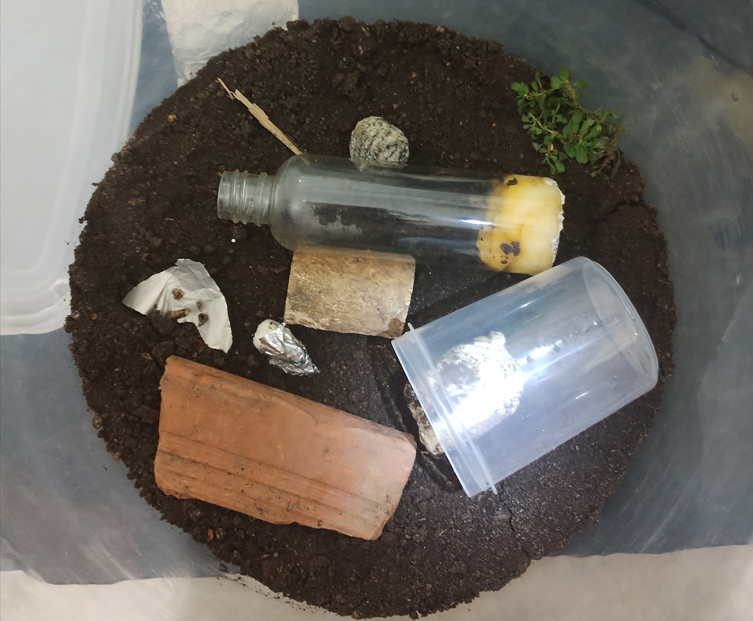
Colony 08/07/2026

Wakanda

Wakanda

Wakanda
Colony 08/07/2026

Wakanda

Wakanda

Wakanda
Colony 08/07/2026

Wakanda

Wakanda

Wakanda
Colony 08/07/2026

Wakanda

Wakanda

Wakanda
Colony 08/07/2026

Wakanda

Wakanda

Wakanda
Colony 08/07/2026

Wakanda

Wakanda

Wakanda
Colony 08/07/2026

Wakanda

Wakanda

Wakanda
Colony 08/07/2026

Wakanda

Wakanda

Wakanda
Colony 08/07/2026

Wakanda

Wakanda

Wakanda
Colony 08/07/2026

Wakanda

Wakanda

Wakanda
Colony 08/07/2026

Wakanda

Wakanda