Back to the library
Founding Wild-caught

Tamoios

Odontomachus haematodus

  • Queen found in 07/06/2026, while cleaning the yard.
  • The queen was already carrying a batch of eggs in her jaws at the time of separation.
  • The meeting took place on the same field day as the second collection of the Mini Wakanda case, but Tamoios was isolated from the beginning.

TGC thermometer

Public assessment

Latest overall condition score for the colony shared by the keeper

CHM meter Excellent
87.1 /100
Fundação Semiclaustral 07/07/2026 · coverage 87%

Field notebook

Public diary

Dated observations shared by the keeper

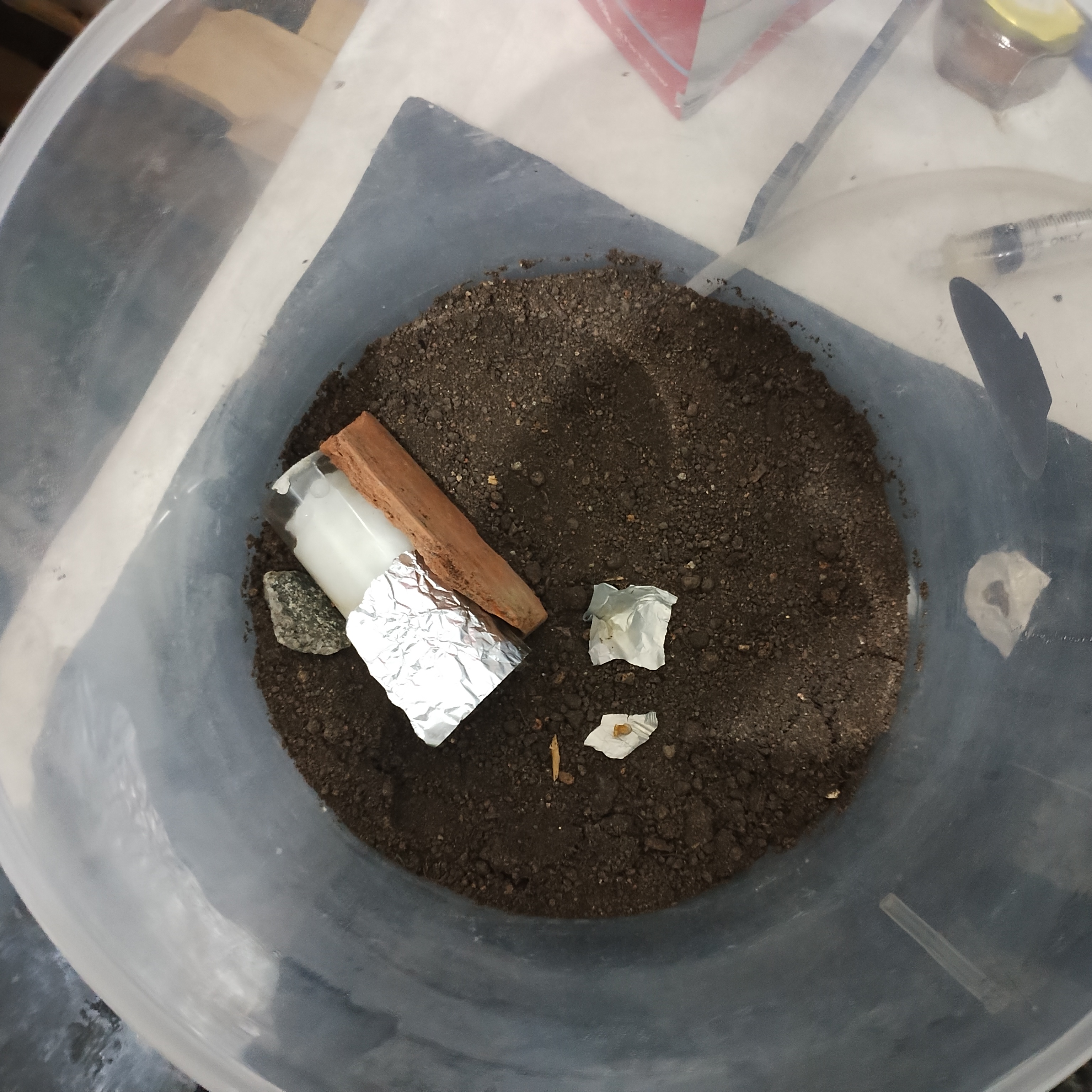
Little flooded nest

07/07/2026

Incident 21:23:00

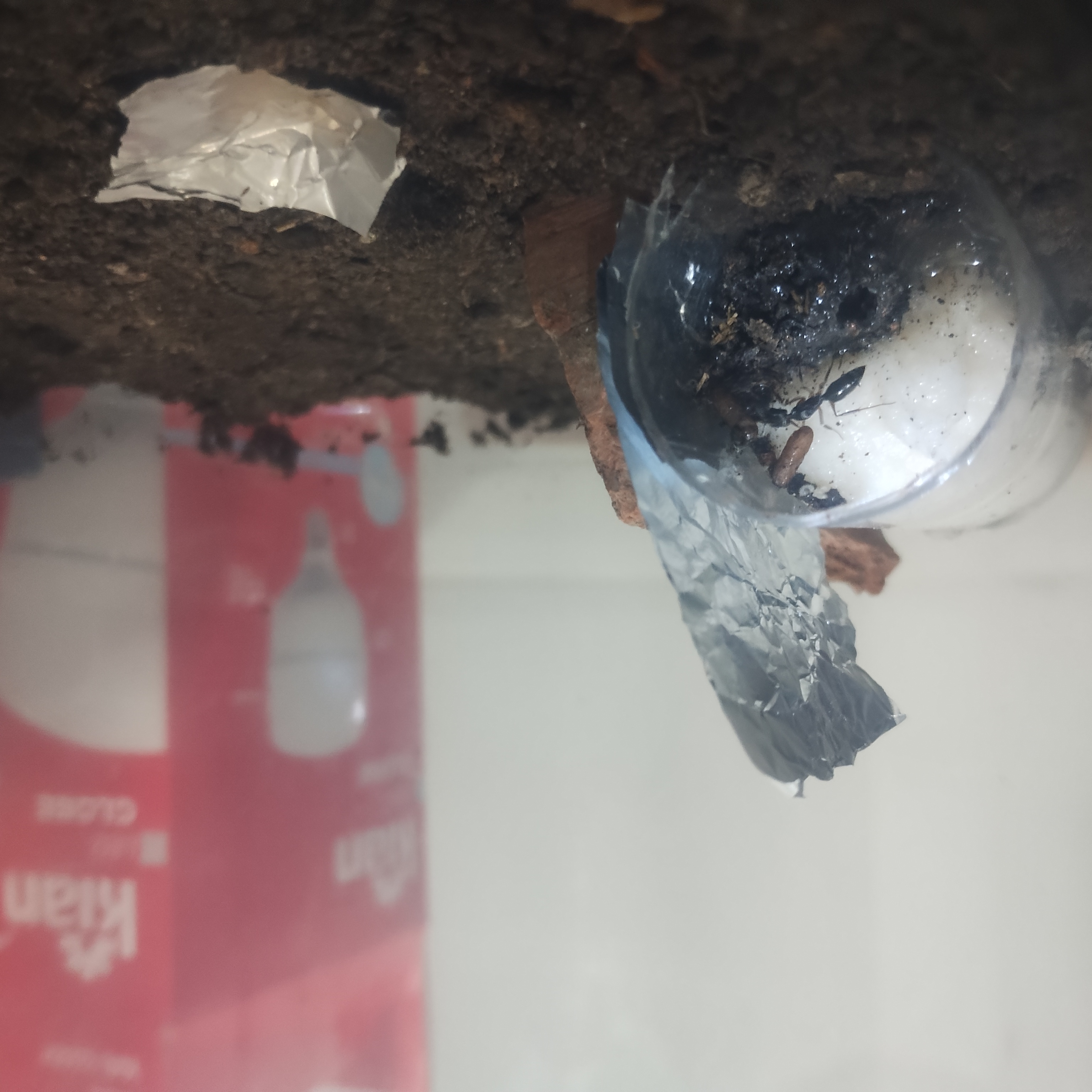
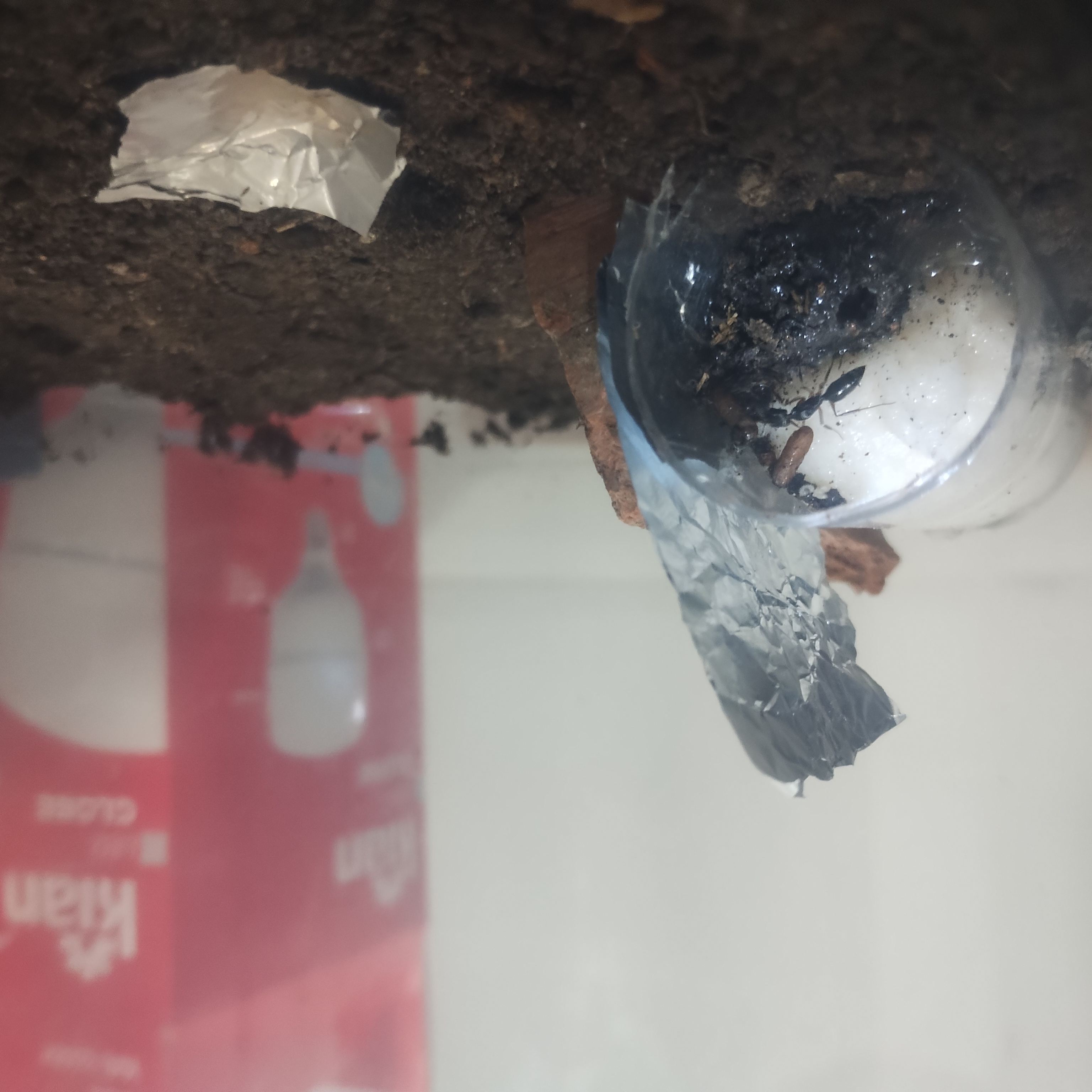
I accidentally flooded the chamber while trying to make the cotton wetter.

I made a small hole in the back of the tube (where the water reservoir is) and used a nail to add more water.

Check-in — 07/07/2026

07/07/2026

Routine 21:16:00

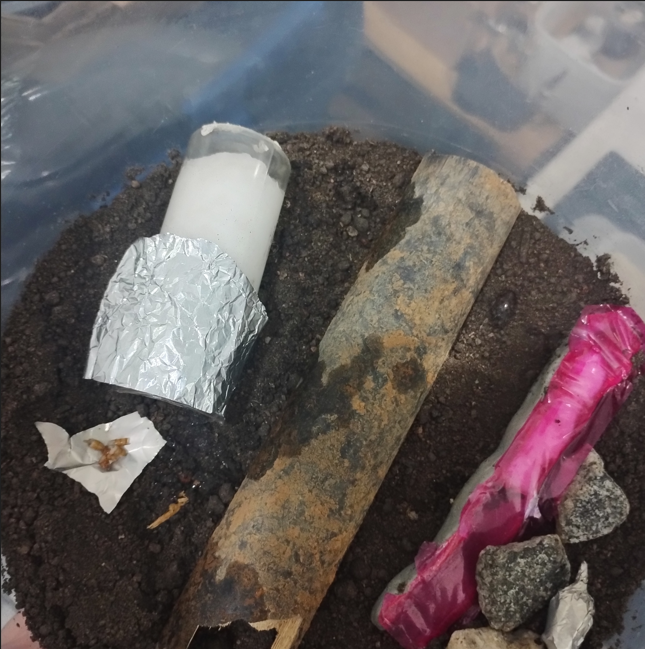
2 big pupas

Record created by the guided check-in.

Overall impression: Thriving.

Population updated — Larvae: 3 → 4; Pupae: 0 → 2.

First pupae

04/07/2026

Milestone 22:05:00

saw at least 1 pupae

Feeding and cleaning

04/07/2026

Routine 22:02:00

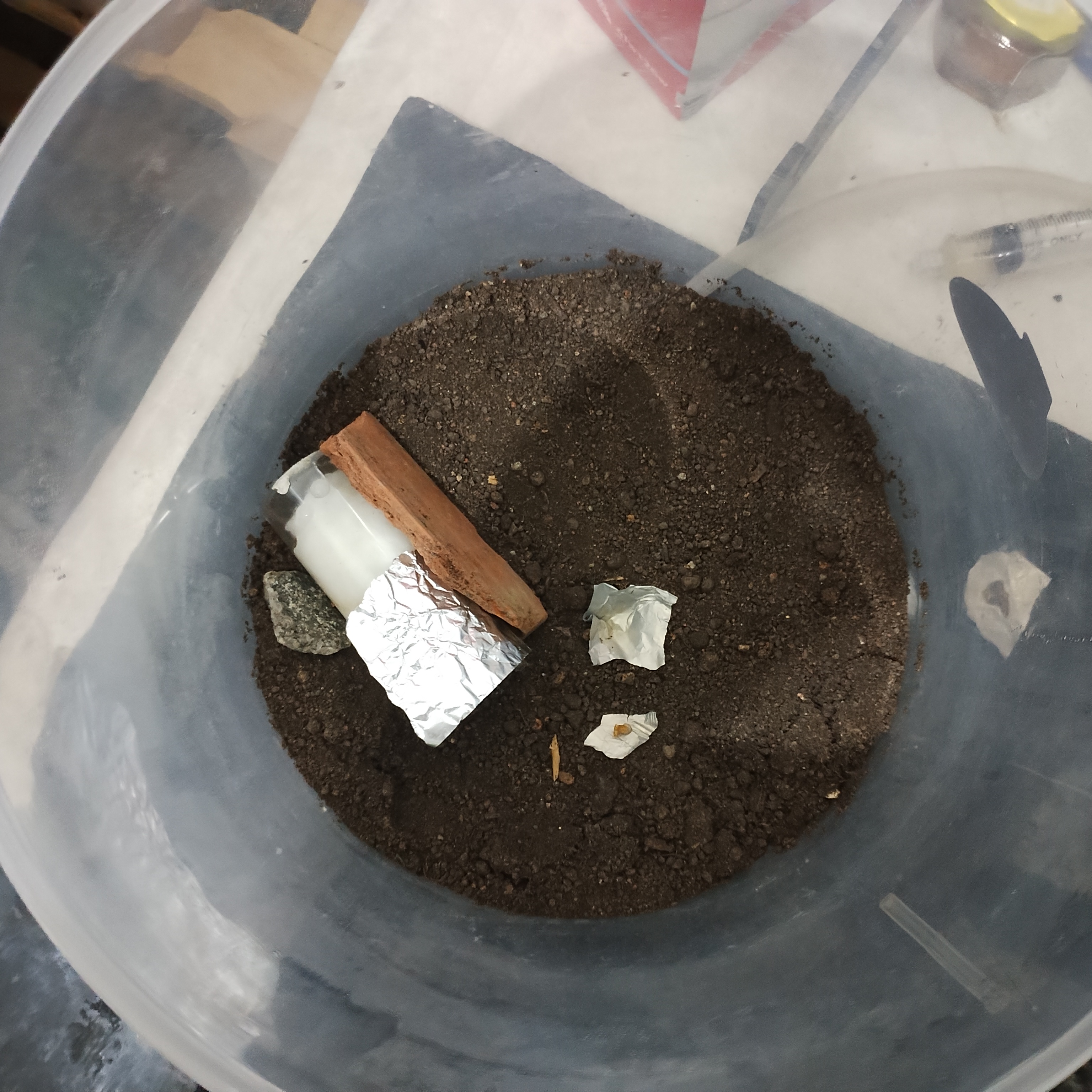
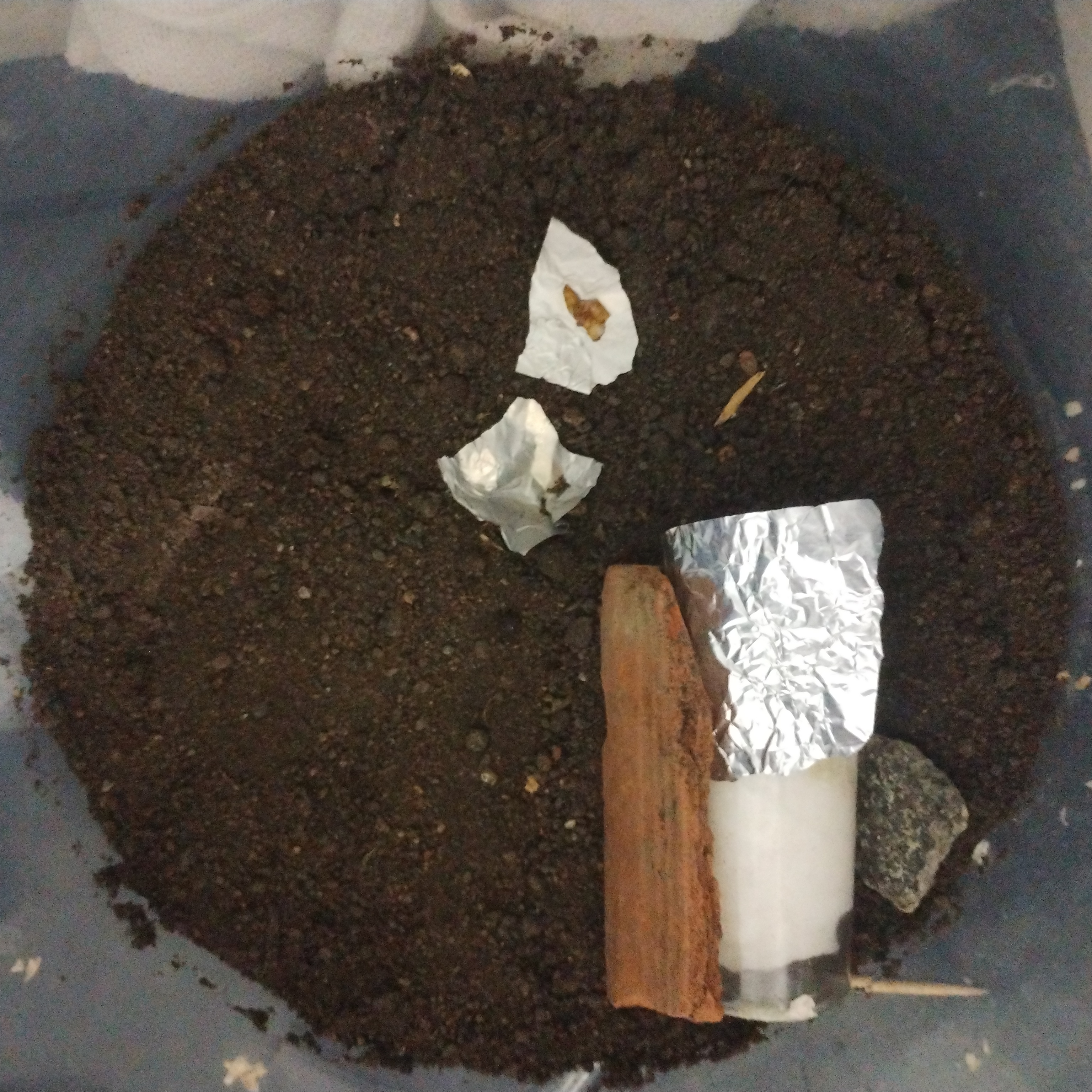
get cleaned all dirty and struct never used

put a alumnium foil plate to honey

Cleaning and Feeding

30/06/2026

Routine 22:30:00

After removing all the remaining mealworms and adding fresh ones, I also noticed that the honey-water mixture offered on the cotton had dried up, leaving the cotton completely white.

Window without interaction after mechanical disturbance from the previous day

15/06/2026

Routine

Observed event

  • There was no interaction with the colony on this day.
  • The setup remained at rest after the mechanical upheaval noticed on 14/06/2026.

Technical reading (hypotheses)

  • For an Odontomachus queen with eggs and larvae in the same shelter, a day without a new opening after a mechanical disturbance is a strong management decision.
  • The absence of interaction today reduces the chance of turning a merely exposed chamber into an abandoned chamber through insistent checking.
  • Since there was no reading today, it still remains open whether the queen tried to re-cover the roof, whether she used the fractioned mealworm or whether she reorganized the brood internally.

What can be done now

  • Concentrate the next reading in the night period.
  • At the next observation, prioritize egg/larva grouping, fidelity to the same spot and state of the mealworm.
  • Avoid any manual reconstruction of the chamber before seeing how the queen herself responds.

Warning signs to monitor

  • The need to open several times on the same day to "follow" the chamber.
  • Future signs of brood desiccation from prolonged exposure.
  • New mechanical displacement of the pot.

Quick log

  • Interaction today: no
  • Queen seen: not checked today
  • Eggs visible: not checked today
  • Shelter fixed: not re-assessed today
  • Feeding offered: kept from the previous day
  • Behavioral reaction: no new reading
  • Adjustments made: none
  • Next action: short night observation of the chamber and the continuity of the brood

Turn of the pot, exposed chamber and new split offer

14/06/2026

Incident

Observed event

  • All previous mealworm remains were removed from the setup.
  • 1 new dead mealworm, cut into 4 parts, was added.
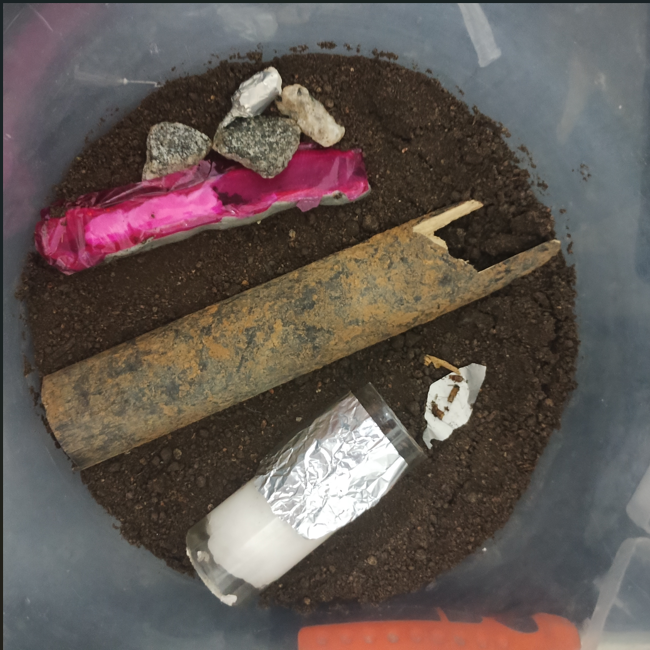
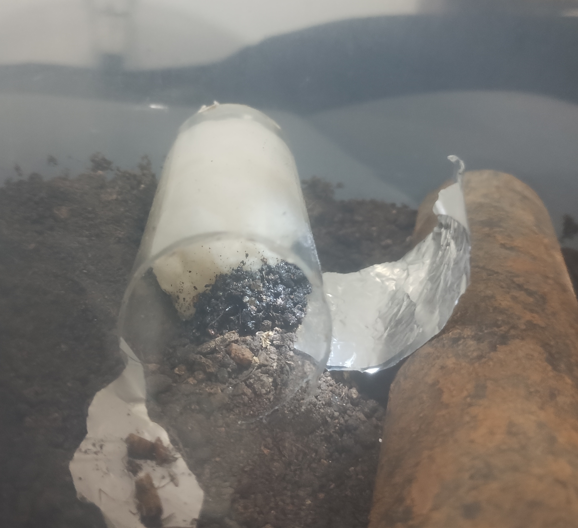
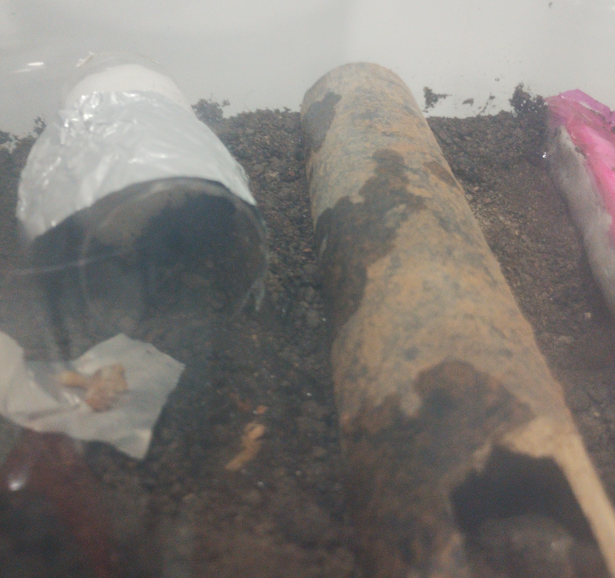
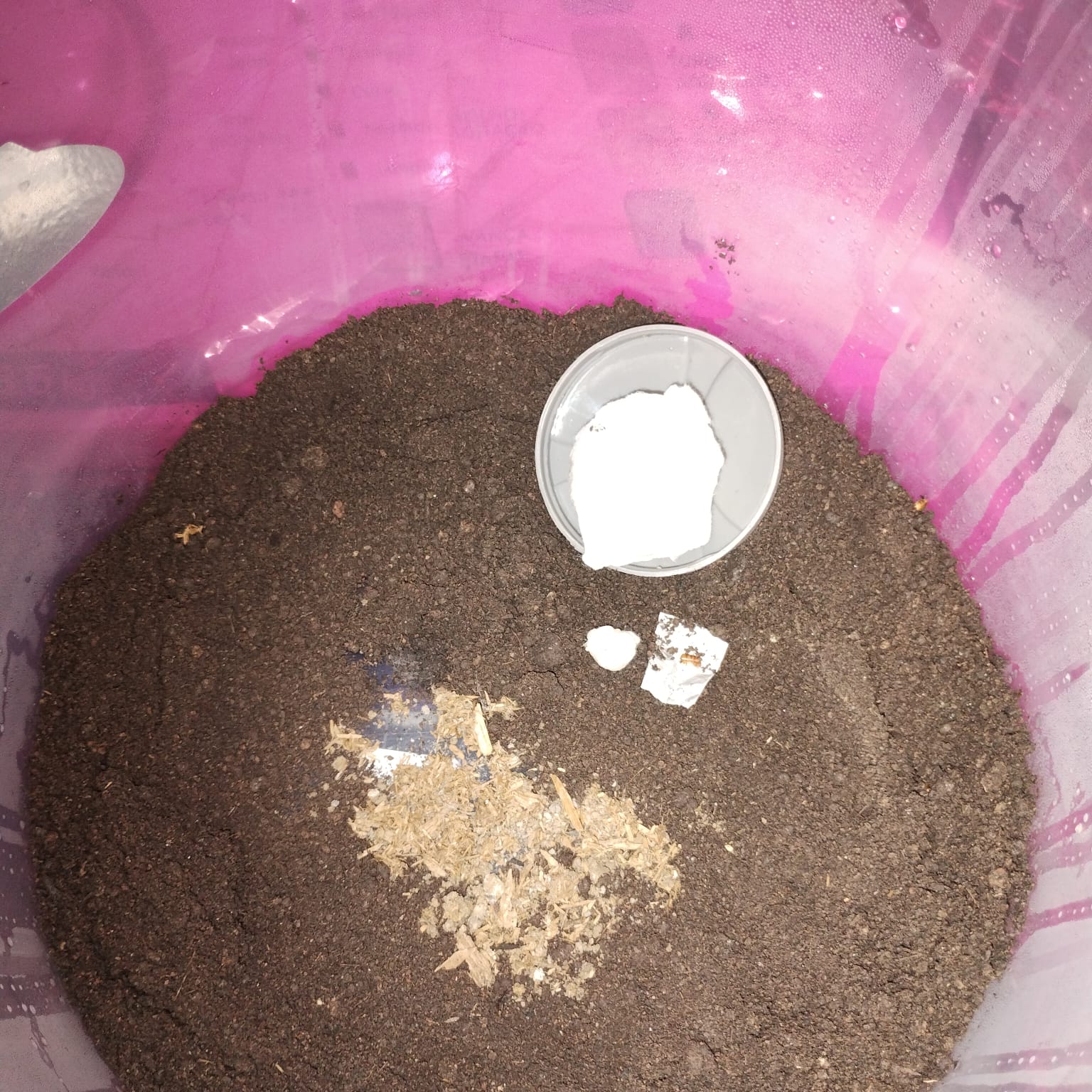
  • It was observed that the lid that served as the roof of the chamber under the cotton had ended up at another point of the pot, flipped over the cotton, indicating the container was probably shaken.
  • Despite the loss of this physical roof, the queen kept the nest at the same previous location.
  • The pot remained wrapped in red plastic, keeping a light filter on the assembly.
  • With the chamber more open, it was possible to see eggs and larvae.

Technical reading (hypotheses)

  • In Odontomachus, the queen staying at exactly the same spot, even after losing the roof, suggests fidelity to the micro-axis humidity + location, not disorganized escape.
  • The red plastic probably preserved enough darkness so the queen did not need to abandon the brood area immediately. This helps explain why the chamber remained functional even without the original lid in position.
  • The simultaneous view of eggs and larvae greatly strengthens the biological case of Tamoios: the queen is not only at the initial egg-laying, she already sustains two brood phases in the same shelter.
  • Since there are active larvae, the decision to return to the fractioned mealworm was coherent. In Odontomachus, smaller portions reduce the manipulation cost and increase the chance of fast use near the chamber.
  • The main risk now is not "lack of shelter", but new vibration. A chamber that resisted a mechanical event and remained occupied should be treated with almost absolute immobility.

What can be done now

  • Keep the pot totally stable, without turning, shaking or repositioning.
  • Observe tonight whether the queen tries to partially re-cover the chamber with soil or whether she keeps using the light cover of the red plastic as sufficient protection.
  • Remove the fractioned mealworm if it ages without use.
  • Avoid lifting the lid repeatedly just because the brood is now visible.

Warning signs to monitor

  • Larvae or eggs becoming scattered and without aggregation.
  • The queen abandoning the historical spot of the chamber right after the shaking.
  • Excessive humidity in the cotton touching the brood zone.
  • Mealworm idle for too long very close to the shelter.

Quick log

  • Interaction today: yes
  • Queen seen: yes
  • Eggs visible: yes
  • Shelter fixed: yes, at the same previous spot even after the lid came off its place
  • Feeding offered: 1 dead mealworm in 4 parts
  • Behavioral reaction: maintenance of the nest at the same location, with eggs and larvae visible
  • Adjustments made: total cleaning of the previous mealworm remains
  • Next action: short night check to read chamber stability and the fate of the fractioned mealworm

Chamber fixation under the lid with visible eggs and larvae

11/06/2026

Maintenance

Observed event

  • The entire darkness offered the night before was removed.
  • A dead ghoul cut into 3 pieces has been added.
  • Honey was added.
  • The queen settled under the lid where the cotton ball with water is located.
  • This area had already been prepared as a chamber, with the bottom and sides partially exposed for observation, but the queen herself closed these windows with earth.
  • Viewing the camera now basically depends on removing the cover.
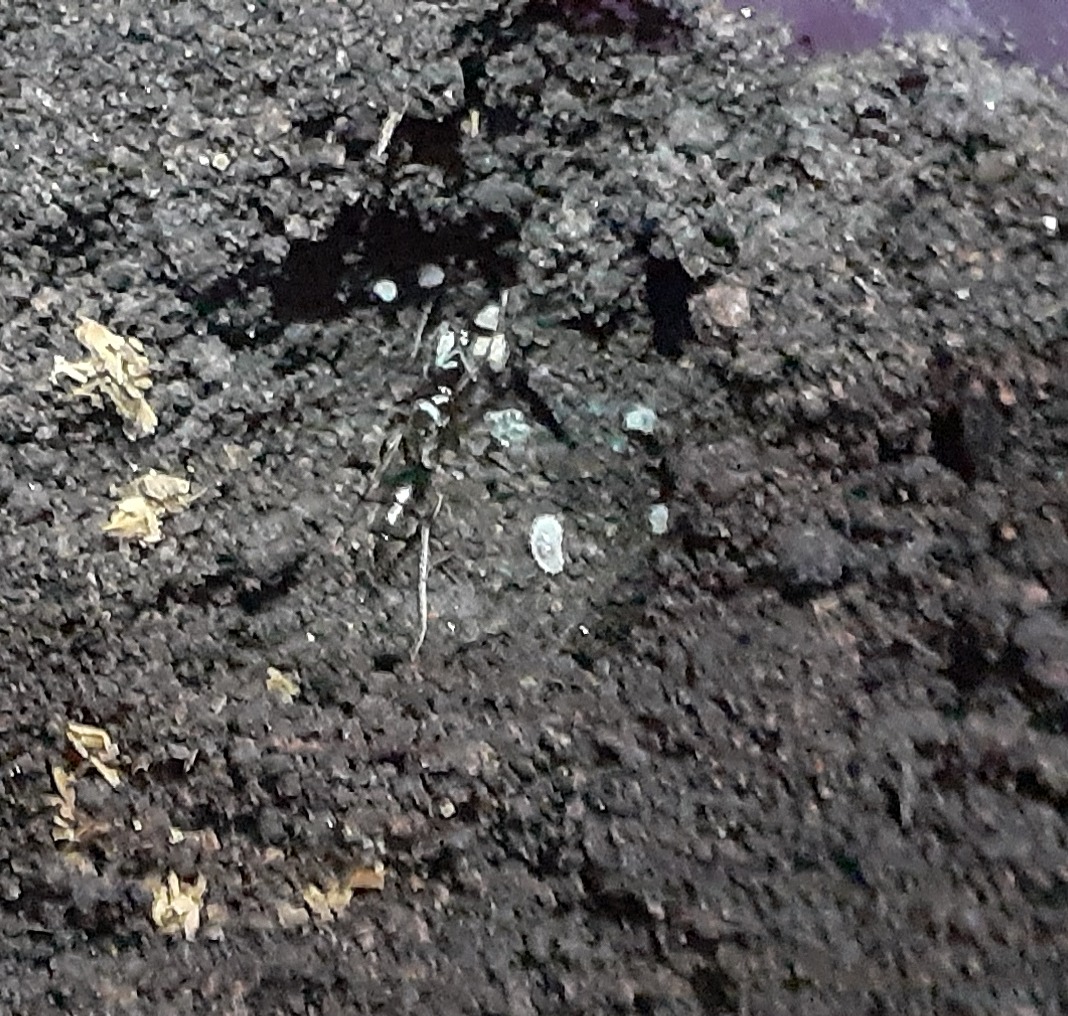
  • Inside the chamber there were eggs and some larvae; A quick reading suggests something around 3 larvae, without a closed count.

Technical reading (hypotheses)

  • For Odontomachus, the queen's fixation exactly under the lid next to the cotton indicates that she chose a point with a firm roof and functional water gradient. This is a sign of real settlement, not just a random stop.
  • The fact that she closed the faces that had been left for observation with earth is technically positive. Instead of “getting in the way of viewing,” this shows active microcamera engineering and prioritization of dark, safety, and microclimate.
  • The simultaneous presence of eggs and larvae a few days after capture fits well in a case in which the queen was no longer at biological zero at the time of the encounter. In practical terms, Tamoios has already entered a more demanding phase than a foundation with just eggs.
  • If there are actually around 3 larvae, the protein value increases immediately for this queen. Therefore, the fractional tenebrio makes more sense here than a whole item: it reduces opening work and favors quick use if she decides to feed the offspring.
  • The new limit of the case is not "see everything". And preserve the chamber that the queen herself approved. In Odontomachus, repeatedly dismantling a shelter that has just been sealed usually costs more than it yields in information.
  • Proximity to the water source is good, but requires vigilance to not saturate the soil just below the cotton. The fine technical point is now umidade funcional and not maxima umidade.

What can be done now

  • Keep the lid as the main cover and avoid lifting it just for frequent counting.
  • Leave honey and fractionated honey in a controlled window, removing excess if it gets old.
  • Use the existence of larvae as a criterion to not delay too much protein microsupply, but without oversupply.
  • Observe from the outside whether the queen remains faithful to this chamber before any structural adjustments.

Warning signs to monitor

  • Soggy soil or condensation just below the cotton ball.
  • Larvae disappearing along with abnormal agitation of the queen after repeated openings.
  • Sudden change of chamber without clear cause.
  • Tenebrio stopped for an excessive amount of time within the shelter area.

Quick registration

  • Interaction today: yes
  • Queen seen: yes
  • Visible eggs: yes
  • Fixed shelter: yes, under the lid next to the cotton ball with water
  • Food offered: honey + 1 dead terebrio in 3 pieces
  • Behavioral reaction: queen seated and with active engineering of the chamber, closing windows with earth
  • Adjustments made: removal of the previous entire tenebrium and exchange for fractionated tenebrium
  • Next action: preserve the chosen chamber and monitor protein use without opening the lid excessively

Capture of new queen with eggs

07/06/2026

Maintenance

Observed event

  • During yard cleaning, another Odontomachus queen was found.
  • At the moment of capture, the queen was already carrying a batch of eggs in her mandibles.
  • This encounter occurred on the same field day as the second collection of the focus now treated as Mini Wakanda, but the queen was isolated immediately as its own case.
  • The queen was separated into her own clean environment, without mixing with other groups in the vault.

Technical reading (hypotheses)

  • Capture with eggs in the mandibles suggests an active and potentially promising biological picture.
  • The main technical gain now is not to intervene, but to preserve the queen's initial organization.
  • In the first hours, any excess of light, vibration or rearrangement can be costly.
  • The fact that the event occurred on the same day as a heavy sorting of another focus reinforces the need to keep Tamoios as an independent biological track.

What can be done now

  • Keep darkness, stability and a low frequency of opening.
  • Observe only enough to confirm that the queen still keeps assisted egg-laying.
  • Postpone adjustment decisions until there is a concrete sign of need.

Warning signs to monitor

  • Scattered eggs.
  • A very erratic queen.
  • Strong condensation.
  • Clearly insufficient humidity.

Quick log

  • Interaction today: yes
  • Queen seen: yes
  • Eggs visible: yes
  • Shelter fixed: uncertain
  • Feeding offered: not recorded
  • Behavioral reaction: not detailed beyond capture with eggs
  • Adjustments made: separation into a clean environment
  • Next action: short stability check over the next 24h

Feeding

Feeding log

Recorded offerings and how the colony responded

Honey water

07/07/2026

Pending
21:17 Liquid Quantity: 1 drop

Mealworm (larva)

07/07/2026

Pending
21:16 Freshly killed, Cut into pieces Quantity: 1 Piece (1/4)

Honey water

04/07/2026

Accepted
22:53 Liquid Quantity: 1 drop

Mealworm (larva)

04/07/2026

Partial
22:51 Freshly killed, Cut into pieces Quantity: 1 into 4 pieces

Mealworm (larva)

30/06/2026

Partial
22:49 Freshly killed, Cut into pieces Quantity: 1 into 4 pieces

Mealworm (larva)

14/06/2026

Partial
00:01 Freshly killed, Cut into pieces Quantity: 1 into 4 pieces

1

Mealworm (larva)

11/06/2026

Partial
00:00 Freshly killed, Cut into pieces Quantity: 1 into 3 pieces

Rainha assentada sob a tampa, com ovos e algumas larvas visiveis

Project notes

Public notes

Context, plans, and supporting records tied to this colony

Diagnosis: Context

07/06/2026

Assessment 00:04:00
  • Field identification: Odontomachus, with a provisional technical reference in Odontomachus haematodus.
  • Case origin: new queen found on 07/06/2026, during yard cleaning.

Project summary: Success Criteria

07/06/2026

Plan 00:03:00
  • The queen remains alive and mostly calm.
  • Eggs and larvae remain grouped and tended.
  • There are no signs of chaotic escape, mold or dehydration.
  • The setup shows itself stable without the need for frequent rearrangement.

Project summary: Objective

07/06/2026

Summary 00:00:00

Stabilize the new Odontomachus queen captured on 07/06/2026 during yard cleaning, preserving the initial egg-laying already observed in her mandibles and conducting very-low-disturbance management.

Gallery

Public photos

Images from the colony and its related public records

New position
Colony 07/07/2026

New position

Tamoios

Tamoios
Colony 07/07/2026

Tamoios

Tamoios

Tamoios
Colony 07/07/2026

Tamoios

Tamoios

Tamoios
Colony 07/07/2026

Tamoios

Tamoios

Tamoios
Colony 07/07/2026

Tamoios

Tamoios

Tamoios
Colony 07/07/2026

Tamoios

Tamoios

Tamoios
Colony 07/07/2026

Tamoios

Tamoios

Roofed the chamber had ended up flipped
Colony 07/07/2026

Roofed the chamber had ended up flipped

Tamoios

Tamoios
Colony 07/07/2026

Tamoios

Tamoios